
When I travel to the beach for vacation, I look forward to spending time exploring…
Historic Places to Visit in the U.S.A.
When it comes to historic places to visit in the U.S.A., plenty of places spring to mind. While our history may be young compared to our European, African, and Asian counterparts, what we lack in years, we make up for in passion.
Many major cities and places have played a significant role in shaping our country and government as we know it today. Here are just some places to get you started.
Historic Places to Visit in the U.S.A.

Philadephia, PA
You can’t have a list of historic places to visit in the U.S.A. and not start with Philadelphia. After all, the war for independence may have begun in Boston, but the City of Brotherly Love was the center of everything. As Robert Morris said, “Philadelphia [is]… to the United States what the heart is to the human body…” From the First and Second Continental Congress to the signing of the Declaration of Independence to its role as the temporary capital of the U.S., there’s so much history in this one city!
When you visit, be sure to grab a map from the Visitor’s Center and explore what’s known as Independence National Historical Park. Start with the Liberty Bell Museum and make your way around from there.
While visiting, don’t forget to place a penny on Ben Franklin’s grave for good luck and stroll along Elfreth’s Alley, the oldest continuously inhabited street in the United States.
Boston, MA
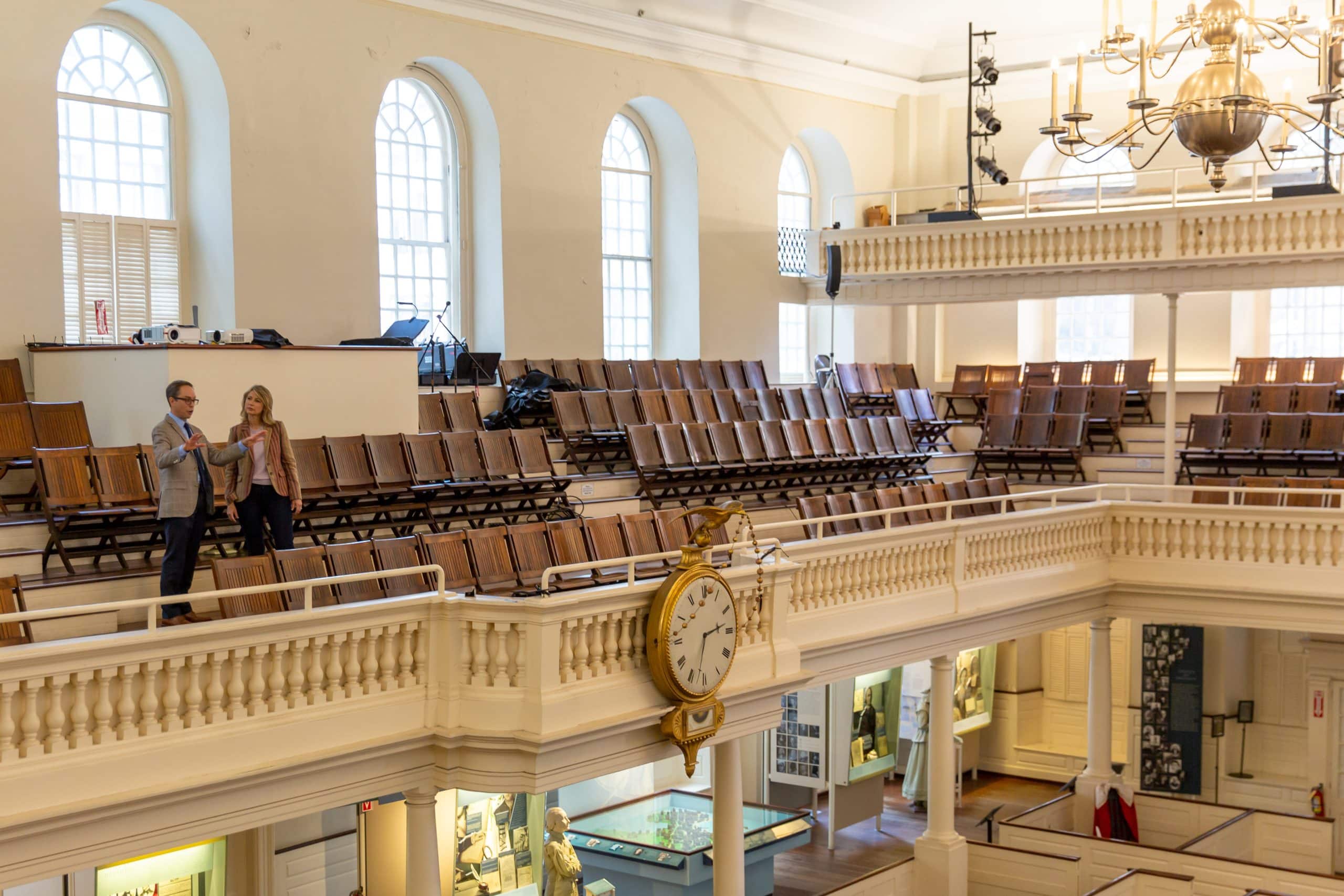
As I mentioned earlier, Boston is widely regarded as the birthplace of the American Revolution. This is where the seeds of rebellion were sowed, and many of the most famous founding fathers often gathered and plotted against Great Britain’s increasingly oppressive taxation.
Many of the most significant events of the war took place here, including the Boston Massacre and the Boston Tea Party. The former occurred in 1770 and is often cited as the spark that ignited the revolution, while the latter is easily the most memorable event for its curious name alone. Not at all a tea party, it describes a protest in 1773 where colonists dumped 342 chests of tea into Boston Harbor (worth approximately $1 million USD). Back during my school days, they used to tell us that so much tea was dumped into the water that you could still find some!
When visiting Boston to explore its historical landmarks, your best bet is to follow what’s known as the Freedom Trail. This 2.5-mile trail leads you through historic Boston and towards 16 significant landmarks. You can walk it yourself or book a tour with some delightfully costumed and knowledgeable guides.
And if you even suspect you have any ties to those who fought in the Revolution, stop by the New England Historic Genealogical Society to see if you can put your family tree together. It’s one of the largest of its kind, so if anyone can tell you if you’re related to George Washington or Alexander Hamilton, it’s them.
See more of what to do and where to eat in our “Boston” episode

Minute Man National Historical Park, MA
The actual beginning of the American Revolution occurred on April 19, 1775, at Lexington and Concord, approximately 20 miles northwest of Boston. At the start of the battle, there were approximately 700 British troops against 77 militiamen, also known as Minute Men. A “shot heard round the world” rang out (from which side, no one knows), and the first battle of the revolution began.
Soon, Minute Men, so named because they could be ready to find at a minute’s notice, were springing to action as the British began searching Concord for arms. When the dust cleared, the Minute Men had only lost about 90 men, sparking confidence that they truly could stand up to the British army.
Today, the Battles of Lexington and Concord are memorialized at Minute Man National Historical Park. Visit the exhibits at the Visitor Center and watch the approximately 30-minute multimedia presentation titled “The Road to Revolution.” Once you’re finished, grab a map and explore the park. If you’re up for it, follow The Battle Road Trail. It’s a five-mile path that connects Concord and Lexington, allowing you to walk in the footsteps of the Minute Men.
The Historic Triangle of Virginia
When it comes to historic places, Virginia is one of the most important in American History. When the American Revolution began, Virginia was not only the oldest but also the largest and most populous colony. And as for the end of the war… it happened right in Yorktown when the British finally surrendered. Williamsburg, Yorktown, and Jamestown make up the Historic Triangle, and all are well worth visiting!
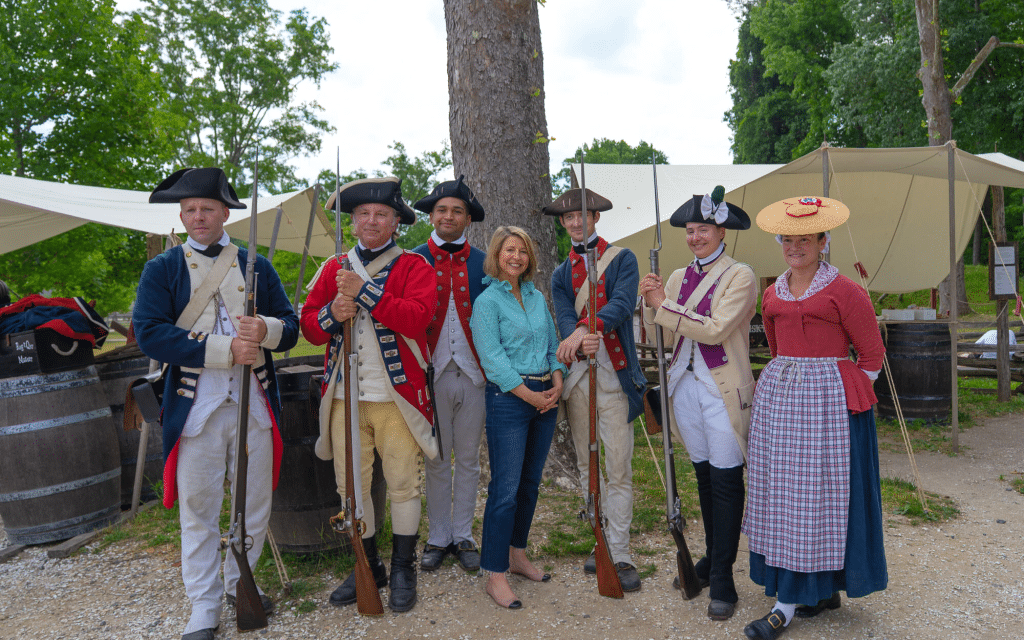
In Williamsburg, explore Colonial Williamsburg. It takes the concept of open-air museums and makes it even bigger. The entire town will feel like you’ve been transported back in time. One of the coolest things to do is to check out all the different shops where you can find tradespeople dressed as they would have been 300+ years ago at work on their crafts. While you’re wandering, be sure to stop by the gardens at the George Wythe House, explore the incredible antique collections at the Art Museums of Colonial Williamsburg, and dine at one of the historic taverns.
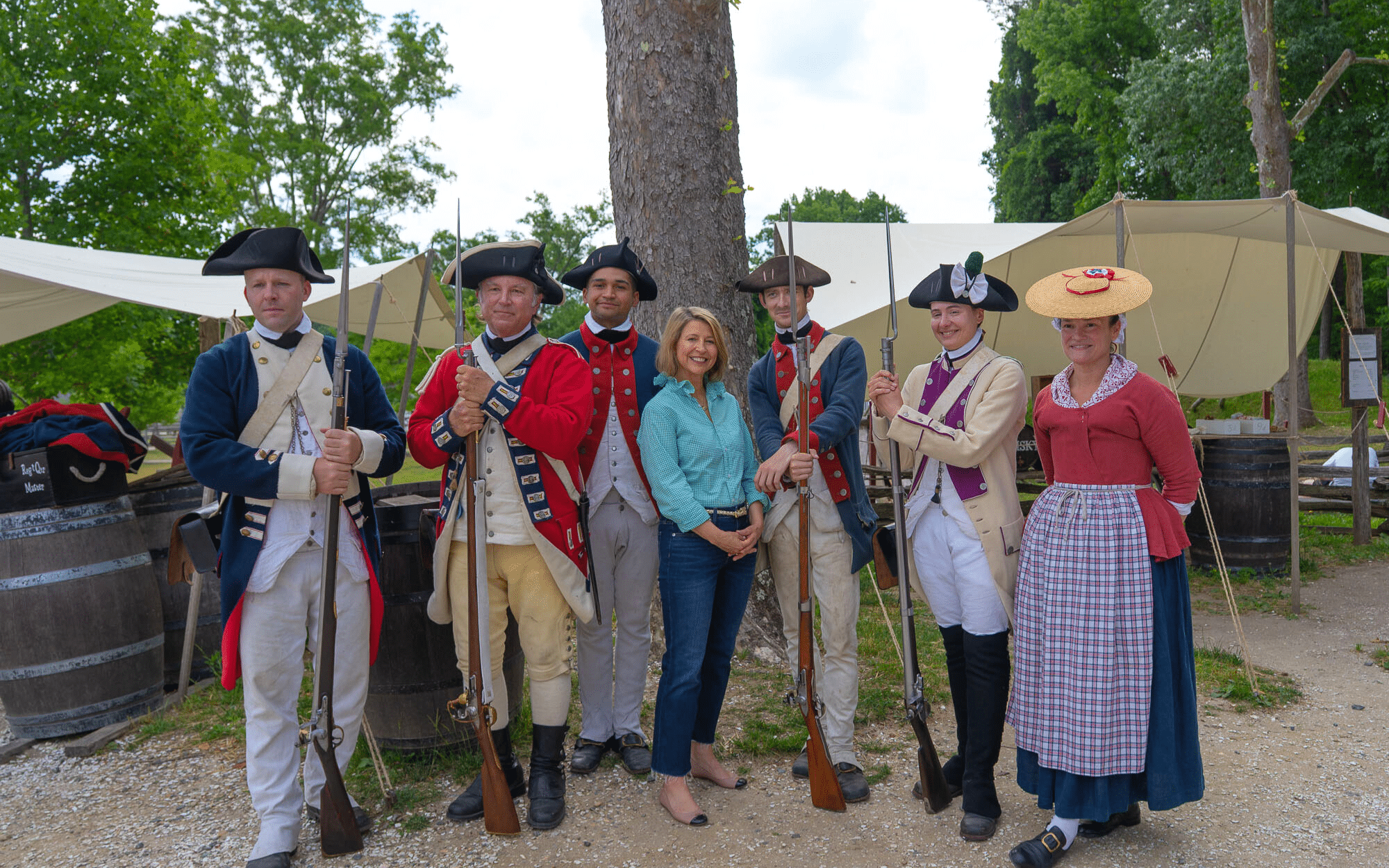
Over in Yorktown, start your visit at the American Revolution Museum. The museum provides a comprehensive overview of all that happened during the war. Once you’ve looked at the different exhibits inside, head outside to walk through the museum’s Continental Army Encampment. You’ll get to see what life would’ve been like as a soldier – right down to the surgical tools they would’ve doctors would’ve used! From here, explore Yorktown Battlefield aboard a Stanley Steamer Wagon ride. Hamilton fans will especially want to check out Redoubt 10!
And, of course, anyone who’s studied American history knows the name “Jamestown.” As the first permanent English settlement on the continent, present-day Historic Jamestowne is a treasure trove of information about the early English settlers and the Powhatan people who lived here before them. One thing to note when visiting is that this is an active archaeological site. As you explore, you may stumble across some digs!
Saratoga National Historical Park, NY
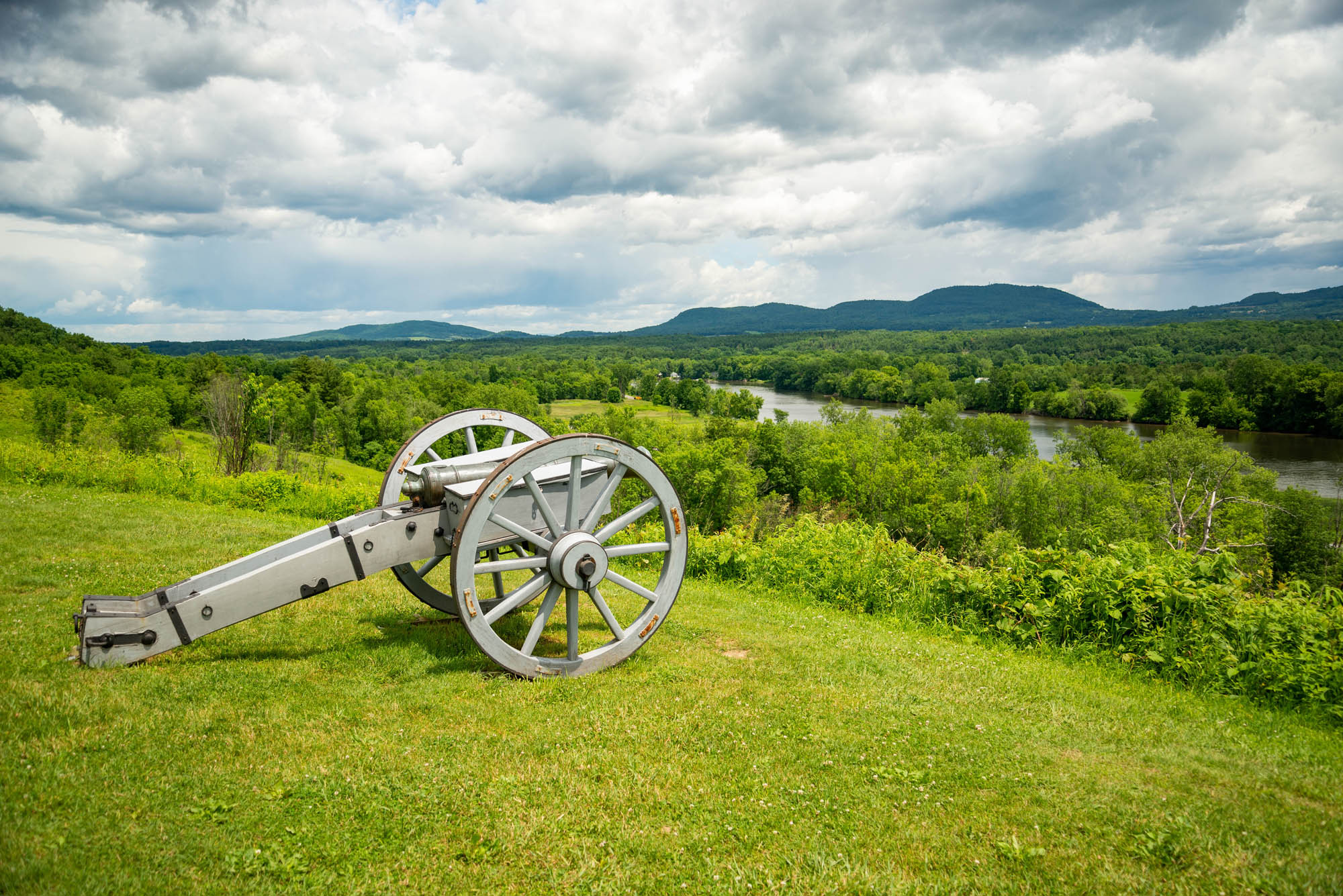
Every major war has its turning point, and the American Revolution reached its pivotal moment at the Battles of Saratoga in 1777. The first occurred on September 19th, and the second on October 7th. By the end, the revolutionaries had won a decisive victory. The Brits had lost around a thousand men, including some key leaders, and surrendered only ten days later. Not only did this boost the war effort and prove to colonists that they could defeat one of the world’s most formidable armies, but it also instilled sufficient confidence in the French to join our side in an alliance.
To visit the sites of the battles, head over to Saratoga National Historical Park. Visit the Visitor Center to view an orientation film and then pick up a map for a self-guided tour around the park.
Valley Forge National Historical Park, PA
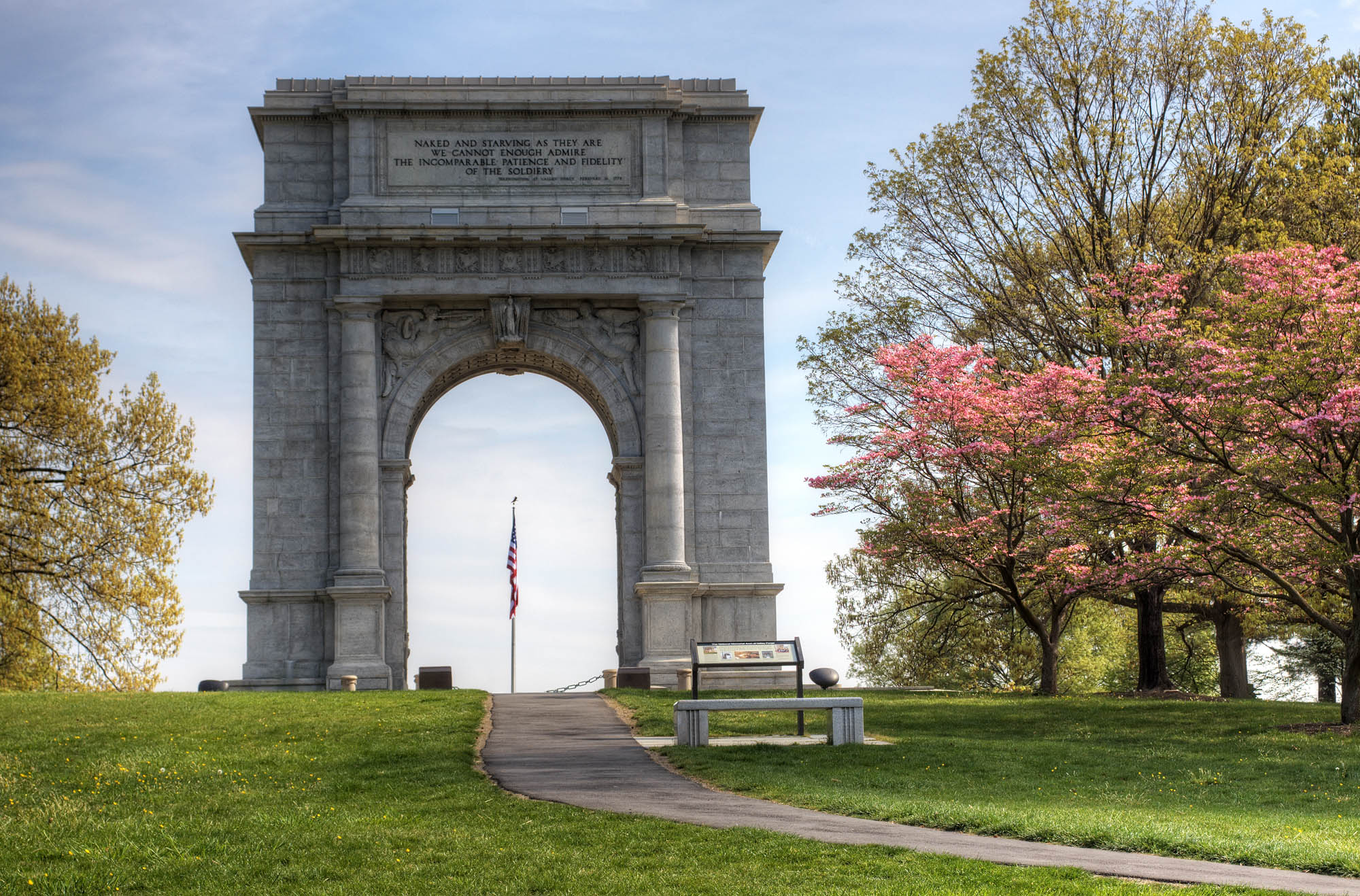
Approximately 30 minutes from Philadelphia is one of the most significant parks associated with the American Revolution. If Saratoga boosted Americans’ morale, Valley Forge tested their will to fight as well as their ability to survive.
Only months after their decisive win at the Battle of Saratoga, the Continental Army was forced to set up their winter encampment in what is now known as Valley Forge National Historical Park. With the British in control of Philadelphia and the new Congress in York, the army had to find somewhere safe to settle in for the long winter ahead.
Conditions were some of the worst of the entire war, as soldiers faced malnourishment, a lack of proper clothing, and even a lack of shoes. Despite the morale boost of the early autumn months, soldiers quickly found themselves sick and dying. However, just when things were at their lowest, Baron Friedrich von Steuben came over from Prussia and helped breathe new life into the army. By the time summer arrived the following year, the British had departed from Philadelphia, and the French had officially joined the fight.
Today, you can find a sprawling park with plenty of landmarks that pay homage to these soldiers’ bitter winter. The most popular thing to do is to pick up a map at the Visitor Center and follow the Encampment Tour – a 10-mile driving loop – and stop off to see key landmarks. Don’t skip Washington’s Headquarters if it’s open! And at the very end, you’ve got to try the soup at the Chapel Cabin Shop by the Washington Memorial Chapel.
Maryland
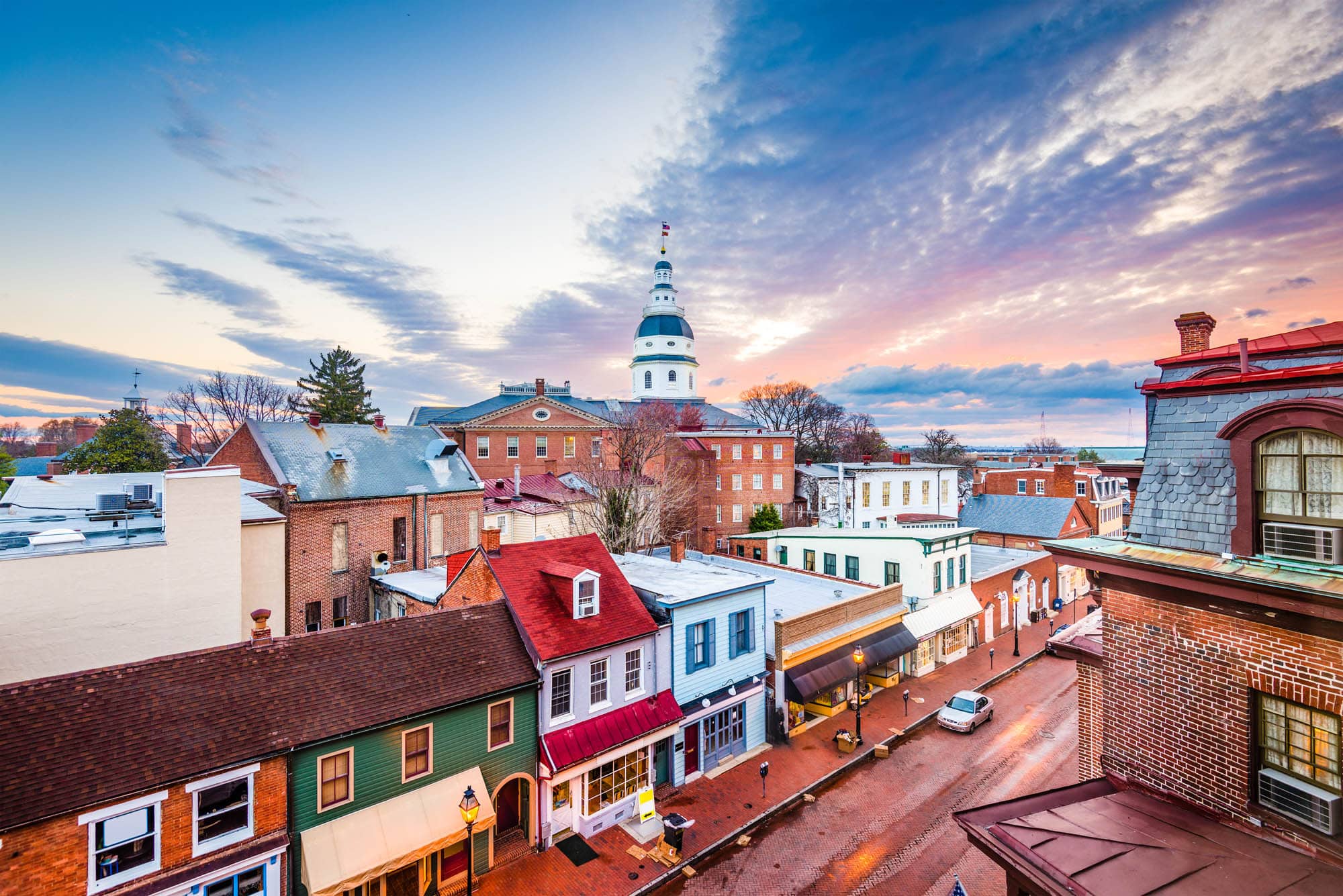
It’s challenging to pinpoint specific cities or places in Maryland that played a significant role in the Revolution, as the entire state collectively provided extremely strong support for the more battle-hardened colonies.
If you visit Baltimore, be sure to stop by Fort McHenry. It was built in 1776 to defend against the British and, more famously, is known as the site where Francis Scott Key wrote our national anthem during the War of 1812. Another must-see is Baltimore’s Washington Monument, which, yes, predates the famous one in D.C.
In Annapolis, citizens held their tea party in 1774, and in 1784, at the Maryland State House, the Congress of the Confederation ratified the Treaty of Paris. A little further away in the small town of Chestertown, Washington College became the first college chartered under American independence and had the General himself on their Board of Visitors and Governors.
See more of what to do in Maryland in our “Baltimore” episode
Monmouth Battlefield State Park, NJ
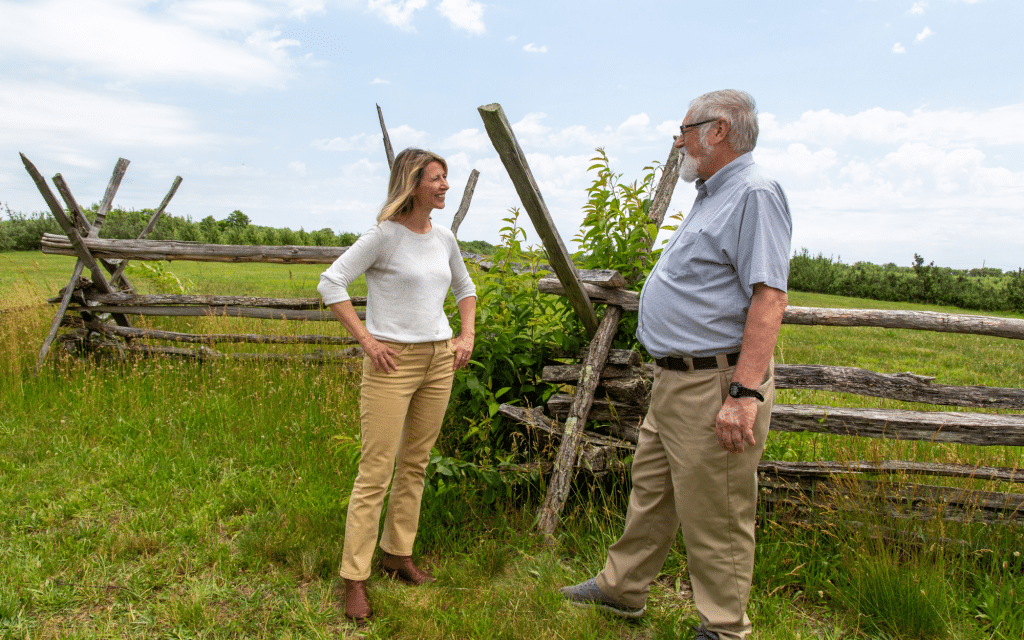
If you’re planning to visit the Jersey Shore, stop over at Monmouth Battlefield State Park on your way to the beach. Taking place on June 28, 1778, this battle is known as the single longest battle in the war, as well as the deadliest. In incredibly hot weather, from 7:00 AM to 7:00 PM, soldiers fought for a much-needed win against the British. By the end, more would die from heat exhaustion than bullet wounds. Although this battle was technically a draw, it was portrayed as a victory for the revolutionaries and helped restore faith in George Washington’s leadership.
Start at the Visitor Center to learn more about the battle and the legendary Molly Pitcher before following the different trails that’ll have you following the same steps soldiers would’ve taken. Come on June 28th, and you’ll be able to see a reenactment of the war to commemorate its anniversary!
See more of what to do nearby in our “Jersey Shore & More” episode

Washington D.C.
To round up this list of historic places to visit in the U.S.A., I must conclude with our current capital, Washington, D.C. Once the dust settled from the Revolution and Congress began to form the government we know today, one important question remained. Where would we put our nation’s capital? Through a series of events, Congress passed the Residence Act in 1790, and then President Washington chose the location. For the next decade, while D.C. was under construction, Philadelphia served as the temporary capital.
Over two centuries later, Washington, D.C., remains the primary hub for all things related to the American government and is a top destination for history buffs. While it didn’t exist during the revolution that led to the formation of the United States of America, it has been central to all that has happened since.
My best advice for visiting is to allow yourself plenty of time to see everything and be prepared to walk. Every neighborhood, museum, and building has some historical significance, and you’ll want to see them all. The Smithsonian museums alone will keep you busy for several afternoons. And, of course, if you plan to visit in the spring, time your trip to coincide with the famous cherry blossoms around the Tidal Basin.
There you have it! Some of the historic places in the U.S.A. to visit if you want to appreciate just how this country of ours was formed. From cities to former battlefields and more, there’s so much to see to learn more about this country.
Comments (6)
Leave a Reply
Related Posts



I thought you’d have Williamsburg Va. on the list for sure, with the triangle area of historic places….we just came back from there last month, very updated museums & memorial weekend was very special honoring veterans & active duty.
Thanks for a great blog Samantha.
Sherry
I think a visit to historic Yorktown, for 4th of July, where you will hear and see a fife and drum play in their 4th of July parade . Stand in front of the house where the British signed their surrender and we then became a free and independent nation. So moving and patriotic. I was so humbled and moved from witnessing this parade and surroundings. Then must visit nearby Yorktown battlefields and Jamestown and Williamsburg too. Historic areas often overlooked
Very interesting article. I agree with your choices and if you want to add historical places from before and after the Revolution, the Gettysburg PA battlefields and the Williamsburg VA area, as mentioned above, are definitely worth a visit.
My granddaughters, ages 9 and11, and my daughter-in-law are in D.C. right now. Any advice for them, I can pass on.
I’ve noticed you’re starting to look like Gwyneth Paltrow!
I like the recaps on youtube.
“Jersey girls carry their own bags!”
three ladies told me at the store.
Haha! Not you, they said that! 🙂
(I know you have told us where you are from.)
I really noticed the new Gwyneth Paltrow thing tonight on TV.
I’m glad you are not on in Seattle so unbearably early anymore, a new afternoon option.
Nevada City, CA is the Queen of the Gold Rush. NEAR grass Valley, CA.