
We all have our happy places! You know what I mean, those destinations that we…
How to Plan a Trip to the Black Hills and Badlands of South Dakota
South Dakota is known as “the land of infinite variety,” and nowhere does that ring truer than in its Black Hills and Badlands regions out west. I loved filming our “Black Hills” episode here because we really put that nickname to the test, and I was left wondering, yet again, why any state but especially this one would ever be considered flyover country.
If you’re thinking of planning a trip to this gorgeous area, below is a guide to help you get started. When you finish reading, you’ll also see how this state got its nickname!
Watch Our “Black Hills” episode below:
Tips for Planning a Trip to Western South Dakota
Getting in and Around
Fly into Rapid City
If you’re flying in, the closest airport is the Rapid City Regional Airport. It’s roughly a 20-minute drive from downtown Rapid City.
Road Trip or Stay in One Place
Honestly, you can’t go wrong with either option. We based ourselves in Rapid City while filming and drove back and forth to different locations. You can reach most places from here in under an hour.
Most people come here to road trip, though, and there are plenty of places to stay whether you want to stay in towns at hotels or camp under the stars.
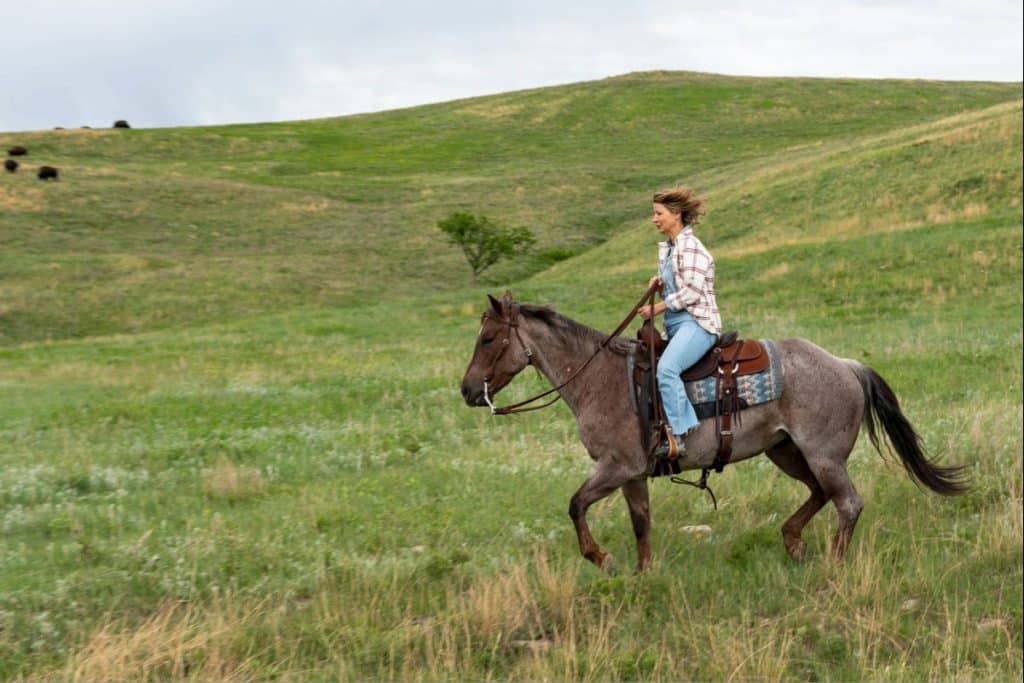
Regardless, you’ll need a car (or a possibly a horse) to get around!
Native American Culture in Western South Dakota
Around 70,000 people of nine different tribes call South Dakota home, and as a result there’s a lot of Native American history and culture all around. Many places within the Western region get their names from the Lakota people. For example, Black Hills comes from Pahá Sápa and Badlands comes from Makȟóšiča. Here are some places where you can learn more:
Crazy Horse Memorial
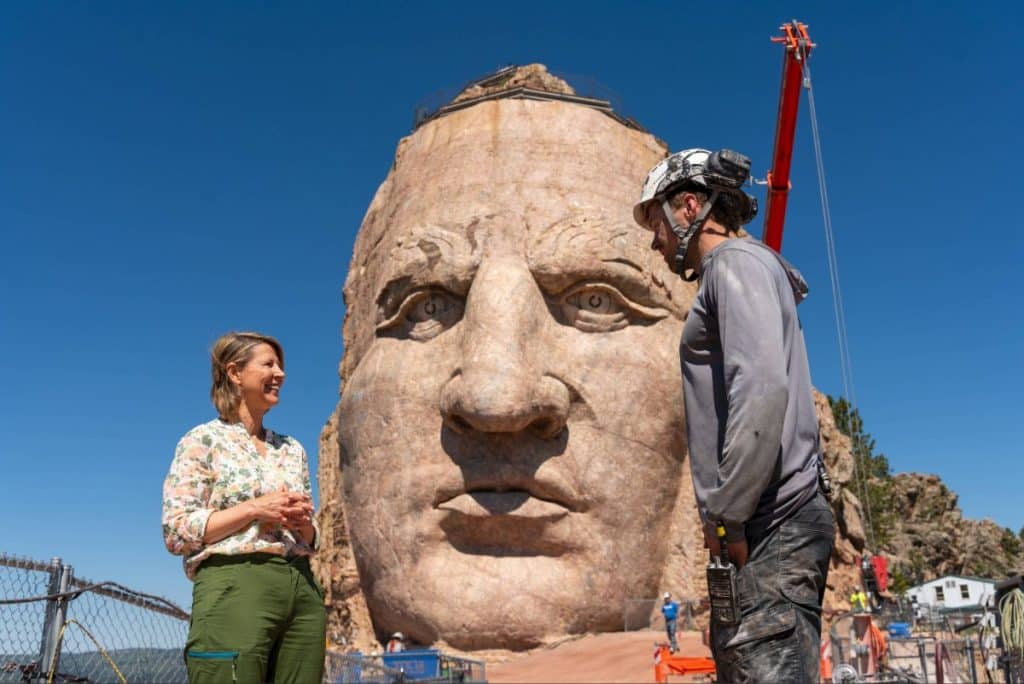
Sitting up at 6,532ft above sea level, the Crazy Horse Memorial is the largest mountain carving in the world and when finished will be 641ft long and 563ft high. It was named after Crazy Horse, or Tȟašúŋke Witkó, an Oglala Lakota war leader famous for his fights against settler encroachment into Lakota land.
In addition to visiting the memorial itself, you can also check out the Indian Museum® of North America to learn the stories of over 300 Native Nations. Also keep an eye on their events calendar for even more cultural programming!
Black Hills Powwow
If you’re planning your trip for October, see if your dates overlap with the Black Hills Powwow, the largest of its kind in the country! Over three days in Rapid City, hundreds of performers and artisans celebrate their culture. Everyone is welcome to come and celebrate with them; just keep in mind visitor etiquette.
Black Elk Peak
As the highest point in South Dakota, Black Elk Peak makes for an incredible hike both for the views and for its history. It was named for Black Elk, an Oglala Lakota shaman who was present at both the Battle of Little Bighorn and the Wounded Knee Massacre. He became notable for interviews about his life with John G. Neihardt who then turned them into an incredibly popular book, Black Elk Speaks. His very first vision occurred on this peak when he was only nine-years-old, and it’s become a sacred monument to his memory.
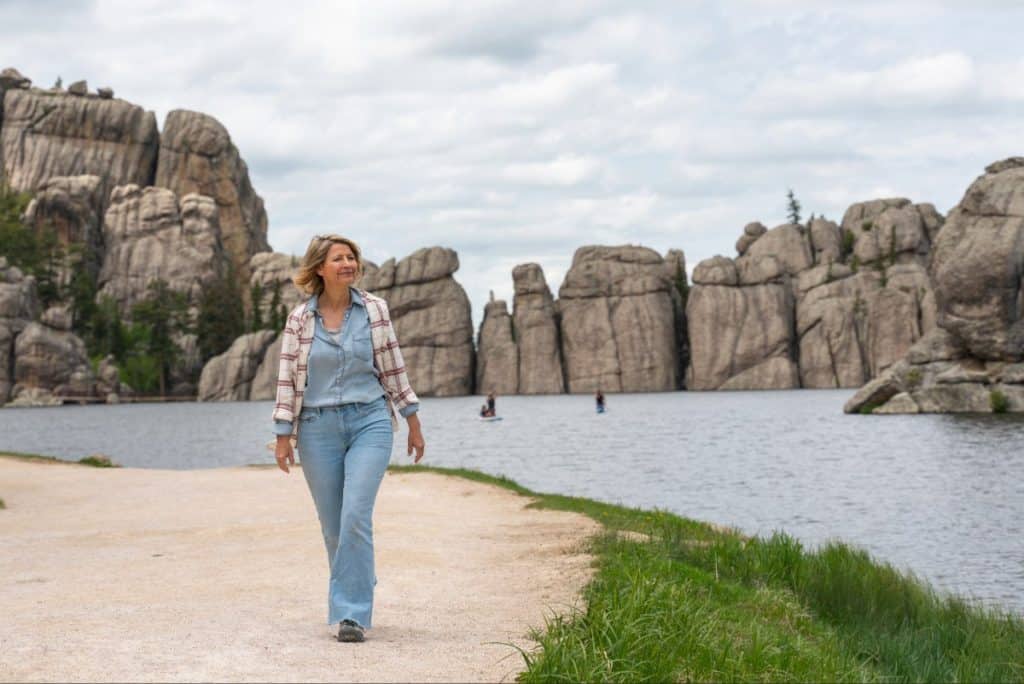
If you’re planning to stay in Custer State Park, there’s a 7-mile round trip trail from Sylvan Lake to the peak.
Prairie Edge & Sioux Trading Post
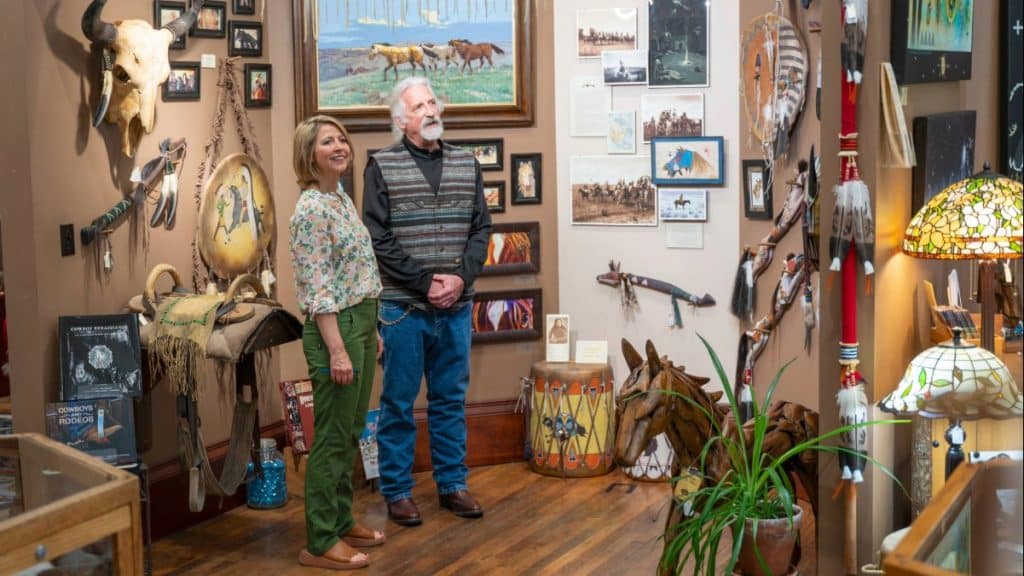
Located in Downtown Rapid City, the Prairie Edge & Sioux Trading Post was created in the eighties to both educate visitors on Northern Plains tribes and to provide a way for Northern Plains artists to get proper compensation for their creations. Even if you don’t plan on buying any souvenirs, the shop is huge and worth checking out!
National & State Parks
In just this one region, there are quite a few national and state parks you can visit!
Black Hills National Forest
It’s hard to visualize just how massive Black Hills National Forest is! It more or less encapsulates most of the places and towns on this list and overall includes 1.2 million acres both in South Dakota and Wyoming. The Lakota called the region Black Hills or Pahá Sápa because, from a distance, the ponderosa pine-covered hills appeared, well, black.
Badlands National Park
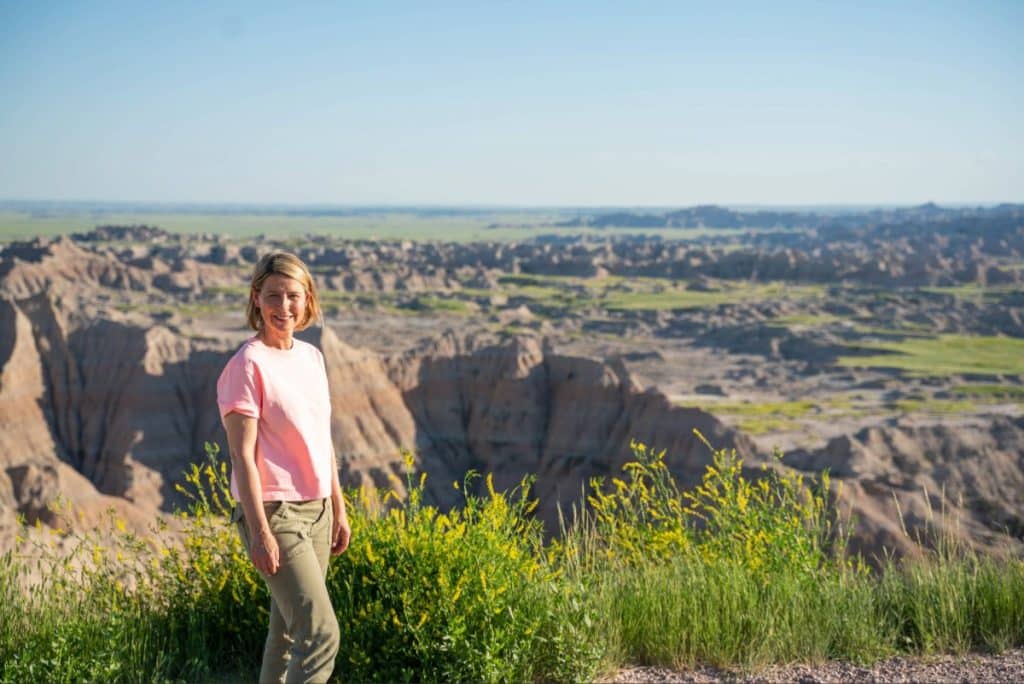
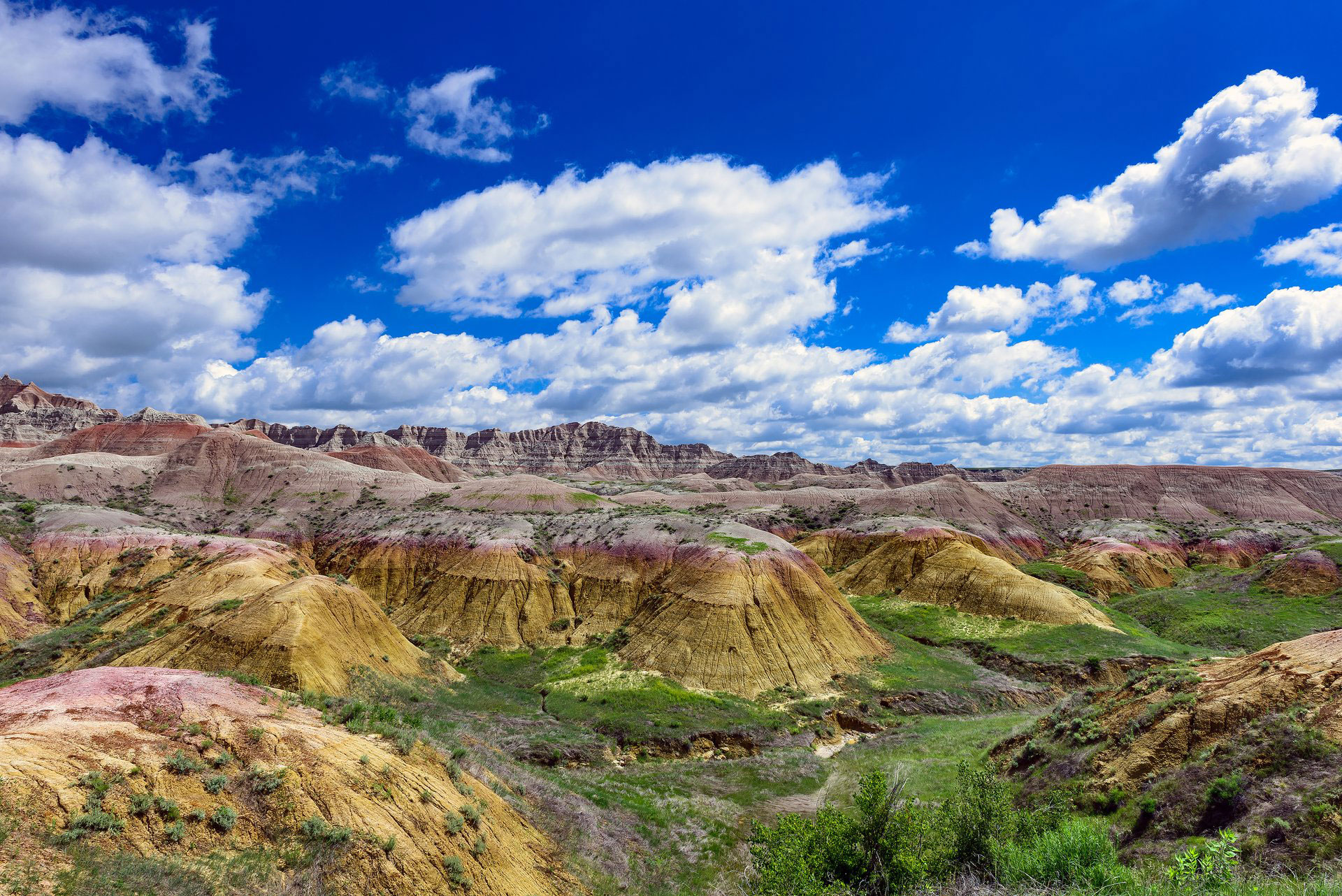
There are 63 “National Parks” in the US and two of them are in this region! The first is the absolutely phenomenal Badlands National Park. For a park with the word “bad” in it, those landscapes are anything but. As I mentioned earlier, the name actually comes from the Lakota Makȟóšiča because as beautiful as those rock formations are, they didn’t exactly make for the most hospitable land. When we stopped by the Pinnacles Overlook, I could not get over what I was seeing in person.
Whether you plan to hike or drive, there are quite a few routes you can take!
Wind Cave National Park
The second National Park in western South Dakota is Wind Cave National Park near Hot Springs. It’s the first cave to be designated a US national park and the densest cave system in the world. Some say it’s like visiting two parks in one – the park below ground and the park above. The cave itself is known for boxwork foundations and above ground you’ll get stunning prairie vistas as far as the eye can see.
Just make sure you book your cave tour ahead of time! There’s no self-guided options and spots fill up quickly.
Jewel Cave National Monument
Even longer than Wind Cave is the Jewel Cave National Monument near Custer. It’s currently the fifth longest cave in the world and second in the US. The name comes from the calcite crystals that cover its walls and like Wind Cave, it’s a breathing cave.
If you’re short on time and can only choose one, Jewel Cave apparently has formations that look exactly like bacon. Enough to sway me!
Minuteman Missile National Historic Site
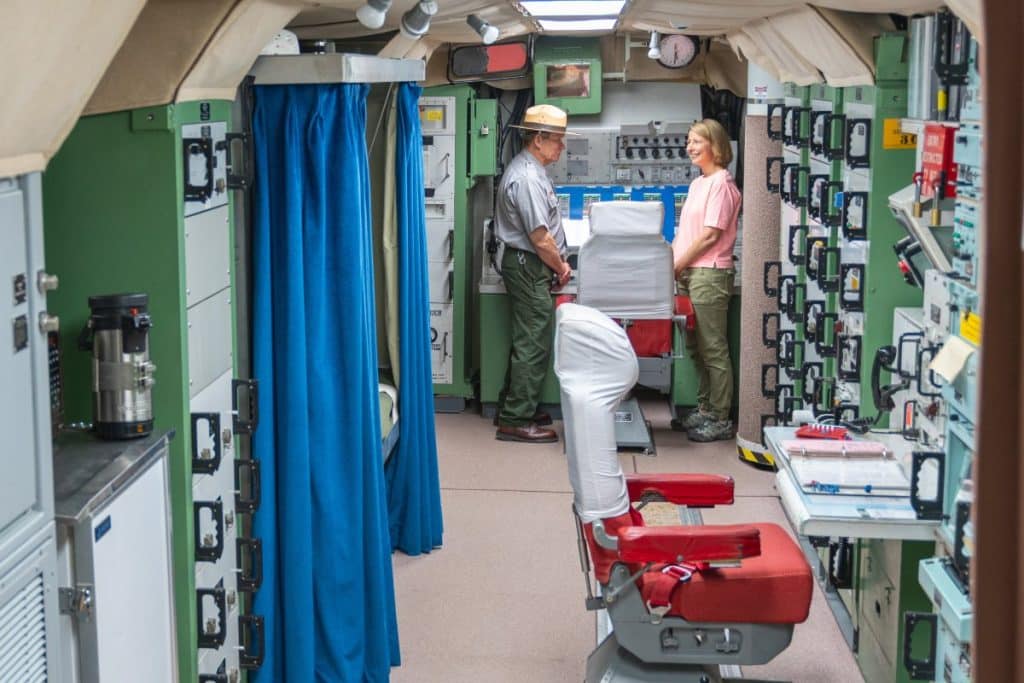
Once upon a time during the Cold War, all around the Great Plains were Minuteman missile fields. The intercontinental ballistic missiles were nuclear weapons that could take out huge swaths with one push of a button. It’s such an intense reminder of how often it felt like we were on the brink of global destruction growing up. Today you can visit Minuteman Missile National Historic Site and go deep underground to tour the last intact Minuteman II Launch Control Center. Make sure you reserve your spot ahead of time.
Custer State Park
Spread across 71,000 acres within the Black Hills National Forest, Custer State Park is such an incredible place to visit. Start off at the Welcome Center to plan your visit and start making your way around the 18-mile Wildlife Loop Road. Not only will this bring you around the park to see all of its incredible animals, it’ll direct you towards most of the main points of interest.
The Bison Center is one of those stops. The whole park is home to 1,300-1,500 free-roaming bison, and this place allows you to learn all about them. You can also book a bison jeep safari to go off road. Come for wildflower season and stop off to do the 3-mile Prairie Trail or if you have a bike, hop off to ride some of the Centennial Trail. The whole thing is 111 miles between Bear Butte State Park and Wind Cave National Park, and 22 miles of it is within Custer!
Another cool scenic drive in the park is Needles Highway. It stretches 14 miles and, as the name suggests, has you threading some pretty narrow rock tunnels!
If you’re road tripping, I’d also recommend staying within the park either near the Welcome Center or at Sylvan Lake. Around the Welcome Center you’ve got the Game Lodge Campground or, for those that want something more comfortable, the State Game Lodge. It dates back to 1920 and even served as the Summer White House for President Coolidge!
Across the park, Sylvan Lake has its own campground called Sylvan Lake Campground as well as Sylvan Lake Lodge. Even if you don’t stay over here, it makes for a lovely lunch stop.
Bear Butte State Park
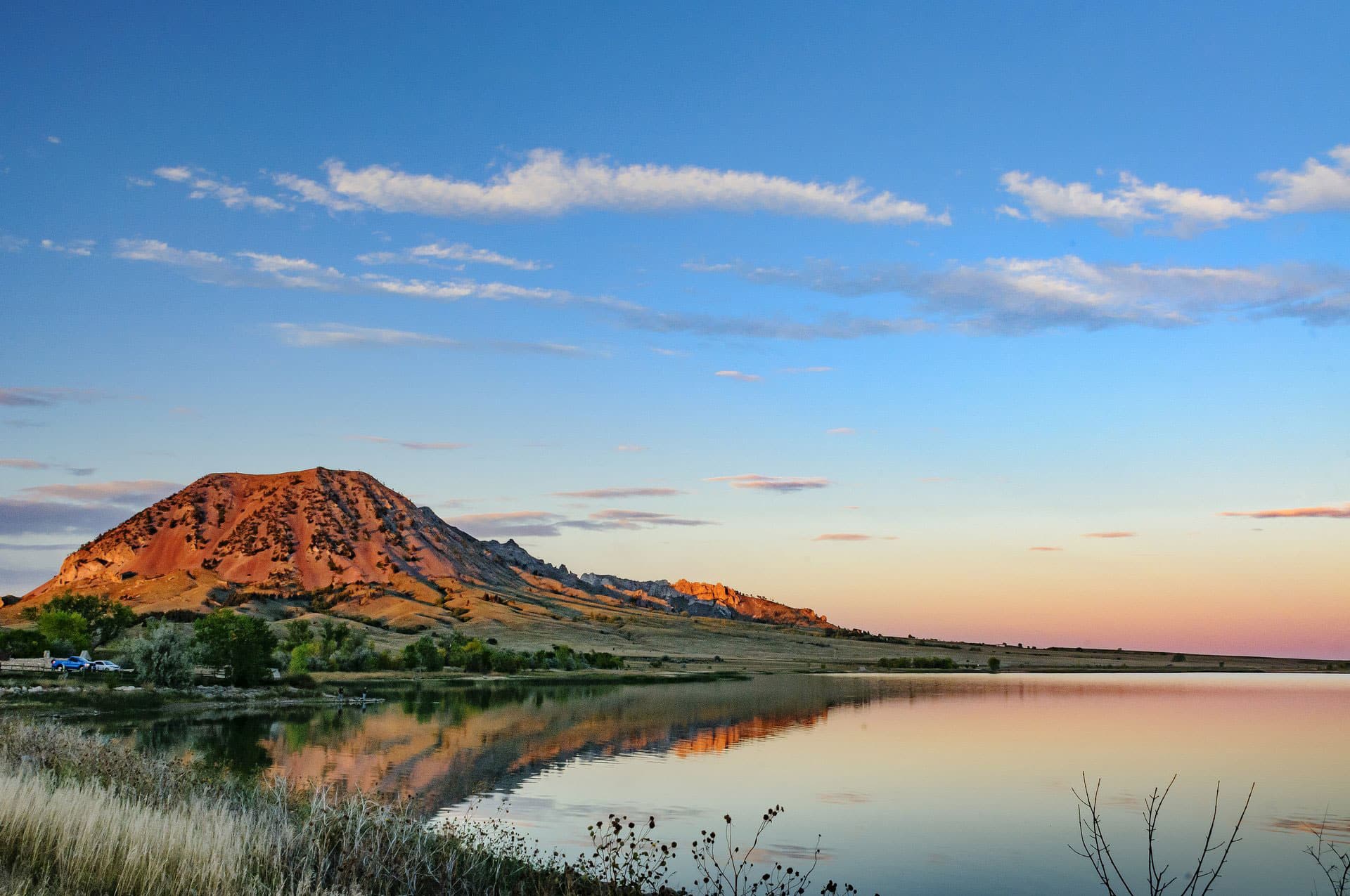
Just outside of Sturgis, Bear Butte State Park was created around what is geologically known as a laccolith, or a sort of rock with a dome-shaped upper surface. The name comes from Matȟó Pahá in Lakota and Náhkȯhe-vose in Cheyenne and is considered a sacred mountain to a multitude of tribes.The butte goes up to 4,426 feet and the Summit Trail is 1.85 miles.
More Towns to Visit and Stay in
Rapid City
There’s a lot to love about Rapid City besides it being the main gateway city to the Black Hills region! Some landmarks:
- City of Presidents – All along St. Joseph and Main streets, you can find bronze statues of nearly every single president we’ve had (President Biden’s is in the works). Get their brochure and see if you can find them all!
- Art Alley – Right between 6th & 7th streets is an alley filled art that changes as often as multiple times a day. If you’re an artist yourself, one of the cool things about this alley is that permits are both simple and free to obtain.
- The Journey Museum & Learning Center – This is a very cool museum that covers 2-3 billion years of Western South Dakota History.
- Dinosaur Park – A little outside of downtown, this fun park is home to seven giant dinosaur statues starting with an 80ft long brontosaurus named Dino. It’s especially great if you’re traveling with kids.
And if you opt to base yourself out of Rapid City instead of road tripping around, check out Hotel Alex Johnson. It’s a stunning Tudor-inspired hotel in downtown and goes back to 1928 (but thankfully with modern renovations). Though, be on the lookout for some potential ghostly visitors including the hotel’s namesake!
Wall
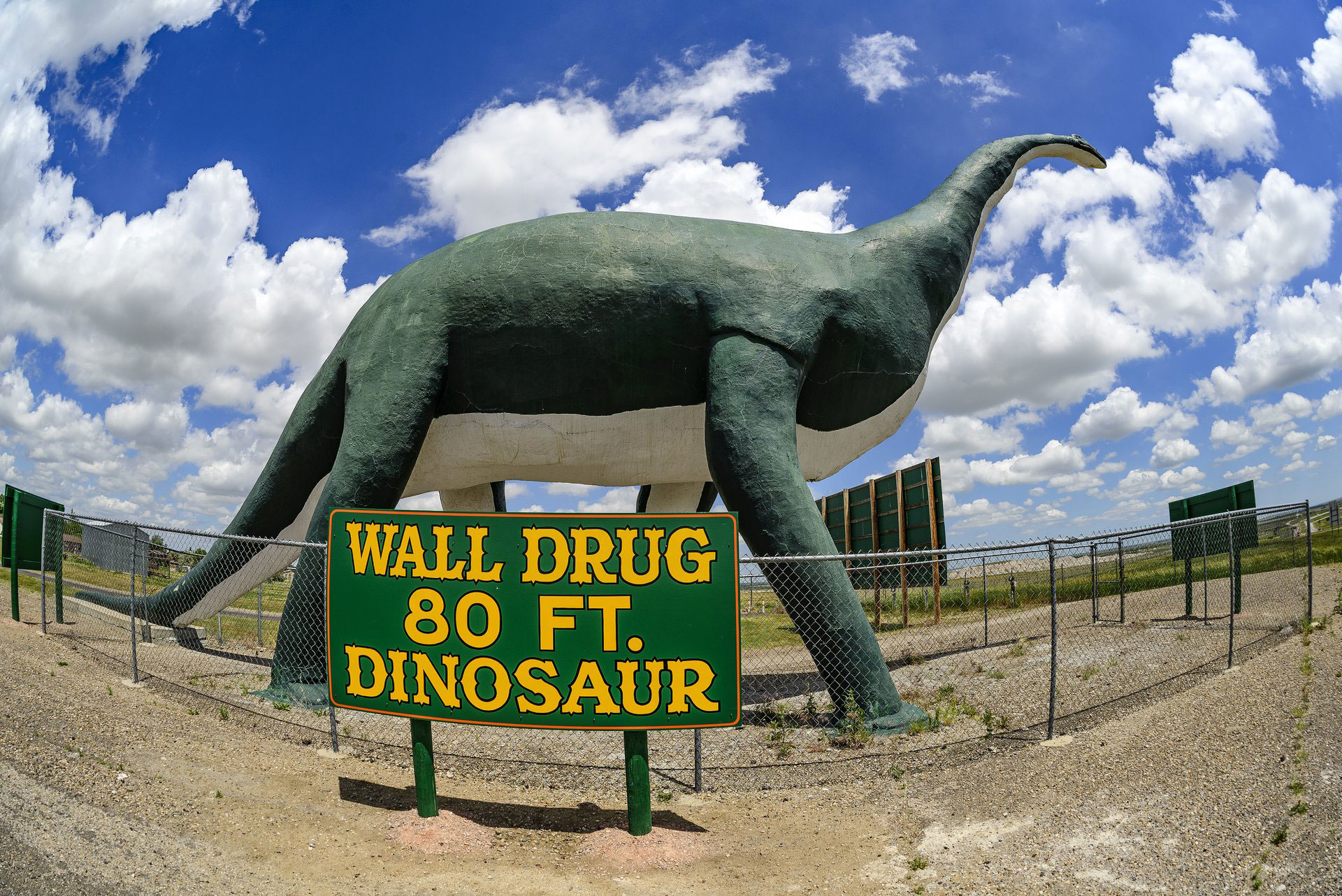
To the east of Rapid City, Wall is a great spot right by Badlands National Park and Minuteman Missile National Historic Site. It’s also home to perhaps one of the most epic roadside attractions in the country – Wall Drug Store. Back during the Great Depression, Ted and Dorothy Hustead opened a modest store and advertised it by offering free ice water all along the highway. Over the decades, the store has just grown and grown to the point that you’ll need a map just to navigate it these days!
As a bonus, veterans can always get free donuts and coffee. It’s a practice the Husteads started for service personnel operating the Minuteman missile silos back in the day and something their descendants honor to this day.
You’ll also want to start the Badlands Loop Scenic Byway from Wall.
Spearfish
Up in the northern part of Black Hills, Spearfish is a great little gateway town to Spearfish Canyon. If you’re road tripping, stay in one of Rimrock Lodge’s cabins or beautiful views of the canyon and plan to drive the Spearfish Canyon Scenic Byway, which’ll take you down to Cheyenne Crossing. You’ll also want to make plans to visit Termesphere® Gallery. Dick Termes is one of very few artists who creates the most breathtaking 3D spherical art and his pieces are otherworldly. Just make sure to call when you want to visit.
Sturgis
Nearby Spearfish is the small town of Sturgis. Besides being close to Bear Butte, it’s an absolute mecca for any motorcycle lover. Not only do you have the Sturgis Motorcycle Museum & Hall of Fame and biker bars like Full Throttle Saloon (the largest of its kind), every year it hosts the Sturgis Motorcycle Rally. And, as with most places in Western South Dakota, it’s the start of Vanocker Canyon Road, a 17-mile drive full of twists and turns that ends in Nemo.
Deadwood
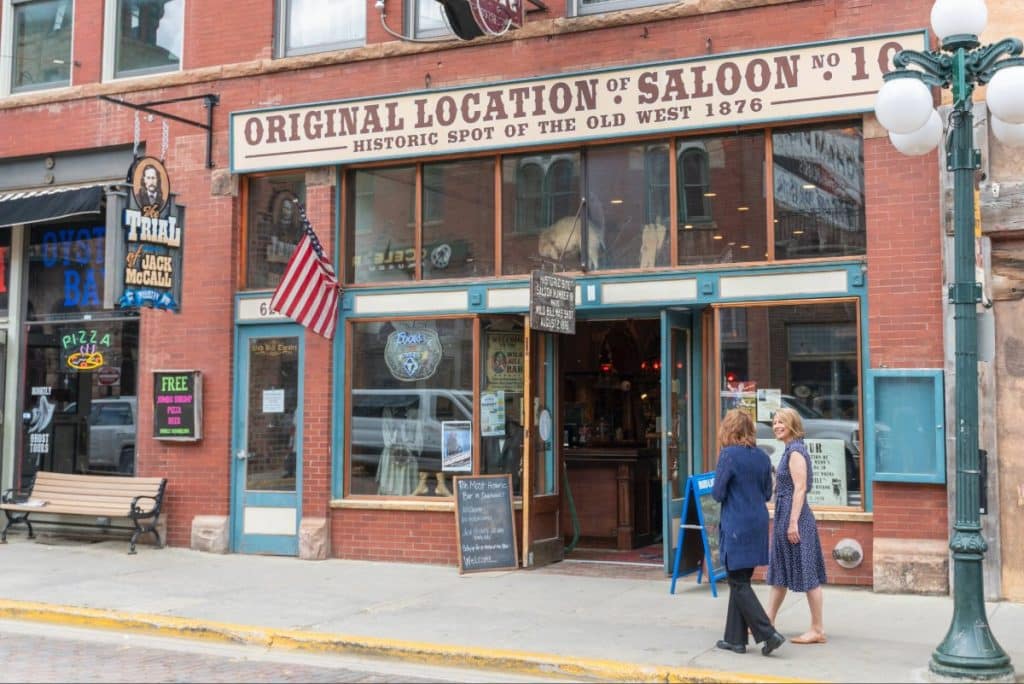
Just south of Spearfish and west of Sturgis is a must-see for anyone intrigued by the gold rush and Wild West era of South Dakota – Deadwood. The town was founded all the way back in 1876 when miners discovered gold and decided to move in en masse. It soon became known as a lawless sort of town that even saw the likes of Calamity Jane and Wild Bill Hickok. Both of them actually died in Deadwood and are buried at Mount Moriah Cemetery.
Walk along Main Street to see all the preserved storefronts and if you come in summer, you’ll see different reenactments. Days of ‘76 Museum has all sorts of history and exhibits on the early settlers to Deadwood and Broken Boot Goldmine takes you underground to see where miners tried finding gold.

Hill City
Consider the “Heart of the Black Hills,” Hill City is a great spot to stay if you want access to a lot of outdoor recreation. It’s close to Custer State Park and Crazy Horse Memorial and about half an hour from Rapid City. You can easily access the Mickelson Trail from here. The 109-mile trail covers more than 100 converted railroad bridges and four rock tunnels. If you don’t have your own bikes, rent some from Rabbit Bicycle. They even have a shuttle service!
You can also hop aboard the 1880 Train in Hill City. The historic train takes visitors on a scenic 2 ½ hour journey to and from Keystone and right through the Black Hills.
If you’re here in the summer, look into booking a Chuck Wagon Dinner Show with Palmer Gulch. You’ll enjoy an authentic cowboy experience where everything is cooked right over a fire and local cowboys and ranchers perform traditional cowboy music. Upwards of 120 people show up to every dinner so expect a fun time with some truly mouthwatering food!
You might also want to stay here if you’re road tripping. The Mount Rushmore Lodge holds 61 guest rooms and also has a variety of nearby cabins and RV/tent sites.
Hot Springs
Down south and near Wind Cave National Park, Hot Springs is the perfect spot for those of you who like either paleontology or rest and relaxation. Beyond planning a tour of Wind Cave, visit The Mammoth Site, which houses the largest concentration of mammoth remains in the world. It’s still an ongoing excavation site, so you may even be able to time your visit with a dig!
And for those of you seeking some relaxation, check out the different mineral spas and springs! Evans Plunge is the world’s largest natural indoor warm-water pool where the average temperature stays at 87F and it has everything from a sauna to slides. Moccasin Springs is located in the ruins of the Hot Springs Hotel and has six outdoor mineral spring pools that range from 80-105F. Just be sure to prebook your soak pass.
And there you have it; a guide to help you start planning your trip to the Black Hills and Badlands of South Dakota! What did I tell you? Truly the land of infinite variety!! Anywhere you’d like to add? Let me know!
Photos via Travel South Dakota
Comments (12)
Leave a Reply
Related Posts


Thanks so much for the great article, Samantha! We are traveling to western South Dakota this summer.. I love the suggestions in your travel guide. Very helpful!
One of the best vacations I have ever taken. So very much to do and see. We’re making a return trip in 2022. Can’t wait!!
I’m headed back to Minneapolis from Denver and have decided to go through the eastern part of Wyoming & South Dakota on my way back. This article came at the perfect time!
What happened to Hot Springs, it is a great town, to visit.
Yes! Hot Springs! The Mammoth Site is wonderful!
You should also visit The Corn Palace in Mitchell, SD. It is something else!
Go to Custer for the wild buffalo roundup in September, it was amazing to watch them come over the mountains!
There is more to western SD than just the Black Hills region. The Custer National Forest in NW SD is a very scenic area and Shadehill Reservoir near Lemmon is beautiful and that is the area where the Hugh Glass story occurred.
This guide to South Dakota’s western region is incredibly helpful. You’ve really thought through everything you need to know before planning a trip. Thank you for this helpful resource. Saving this guide for later!
Yes, Hot Springs! The Mammoth Site museum and active dig site is fascinating. https://www.mammothsite.org/
Rimrock Lodge in Spearfish Canyon is closed this year. Plan is to reopen in 2022. If you want to stay in the Canyon, try Spearfish Canyon Lodge. https://spfcanyon.com/ Also there are cute rental cabins all over the Black Hills.
I second the Mammoth Site and Museum in Hot Springs. It was amazing and educational. I will go again on my next trip through that area.