
As I've gotten older, there's been such a shift in how I and my friends…
A Love Letter to the Coolest City — Tulsa, Oklahoma
Tulsa, Oklahoma, might just be one of the coolest cities in the world, and I don’t think enough people are talking about it! We recently spent some time filming for our “Route 66: Missouri – Oklahoma” episode in the city, and I absolutely loved our whole visit. There’s a fun energy in the city whether you’re a live music lover, a history buff, or coming through on your own Route 66 road trip. Below are just some reasons you’re going to want to go!
Why I Loved Tulsa, Oklahoma
Where Locals Go
One of the things I loved the most about Tulsa is how many local, small businesses I visited!
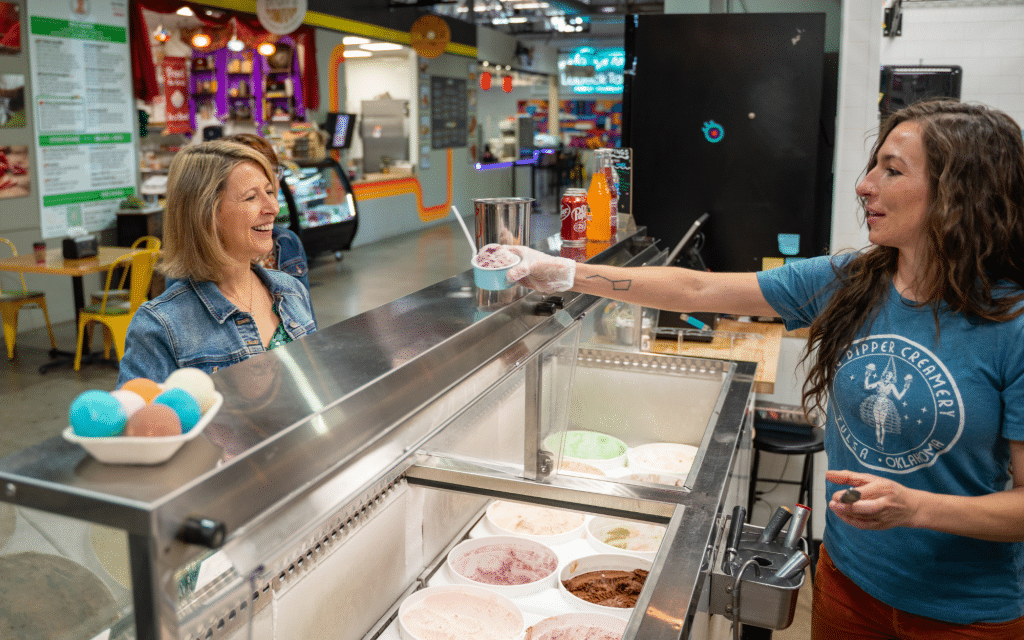
Mother Road Market
If you’re unsure where to start, visit the fantastic Mother Road Market. Named USA Today’s best food hall three years in a row, it’s a huge community space with food options ranging from pizza to sushi. There’s even a place that promises to make cheesesteaks the right way!
Beyond the great food and unique shops, what makes this food hall so incredible is its partnership with Kitchen 66, a Lobeck Taylor Family Foundation program. They aim to make culinary entrepreneurship more accessible by offering affordable commercial kitchen space, business training, and sales and distribution opportunities.
After you’re done eating, check out the different shops and boutiques as well as the Route 66-themed mini golf course. And, of course, it wouldn’t be a Tulsa-based market without live music!
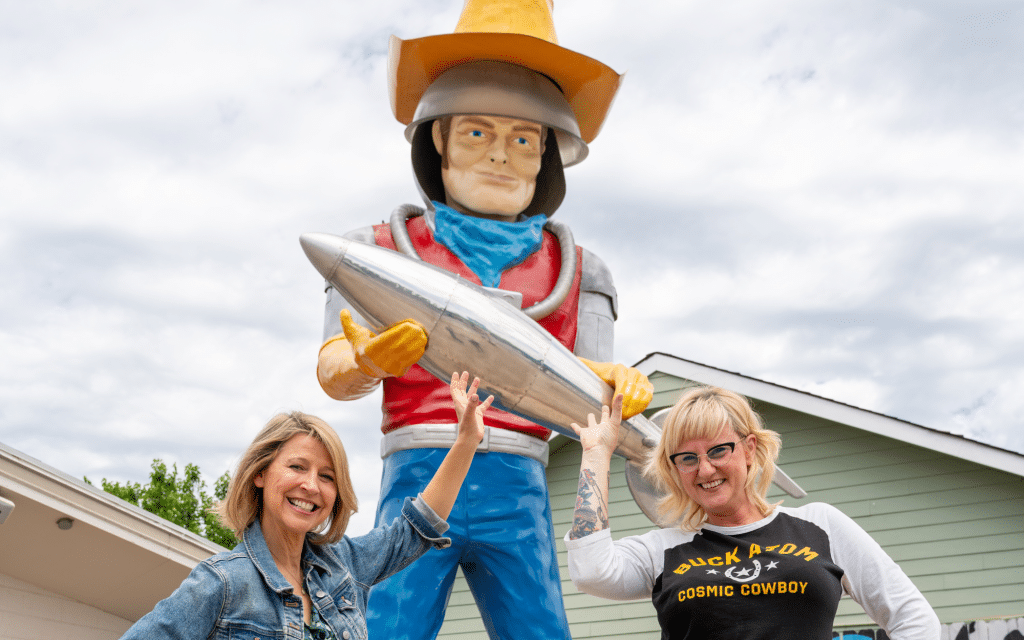
Buck Atom’s Cosmic Curios
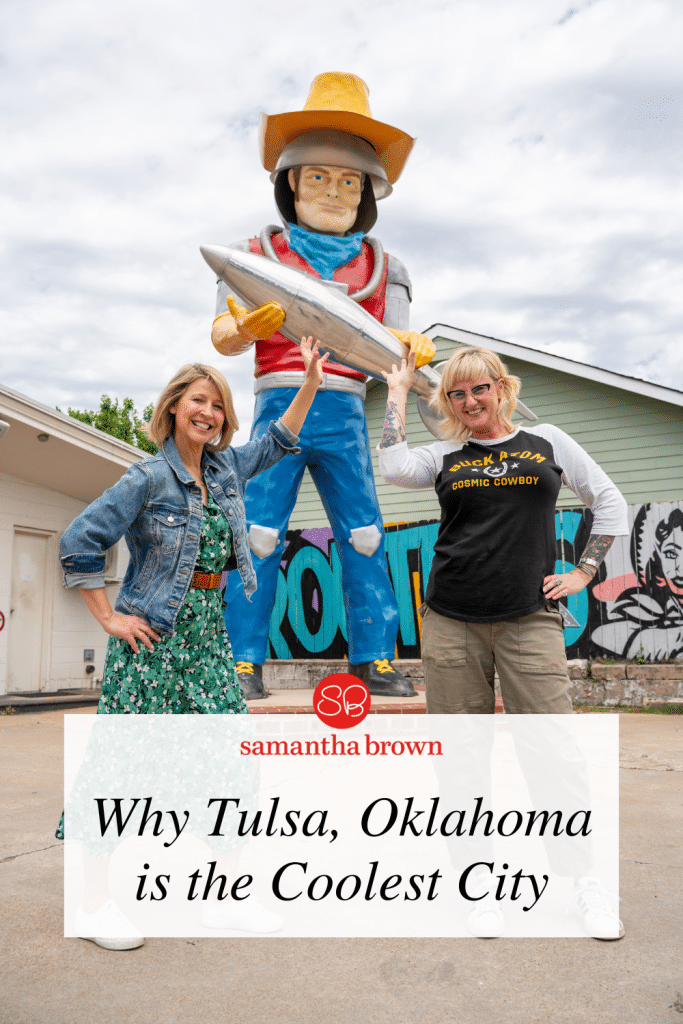
If you’re driving along Route 66, you cannot miss the giant space cowboy right before you get to downtown Tulsa. Named Buck Atom, this giant statue was made from a muffler man mold. Stop in the former PEMCO gas station to check out all of Bucks’ cosmic curios from fun T-shirts to quirky charms and more. Be sure to also pay a visit to Stella Atom.
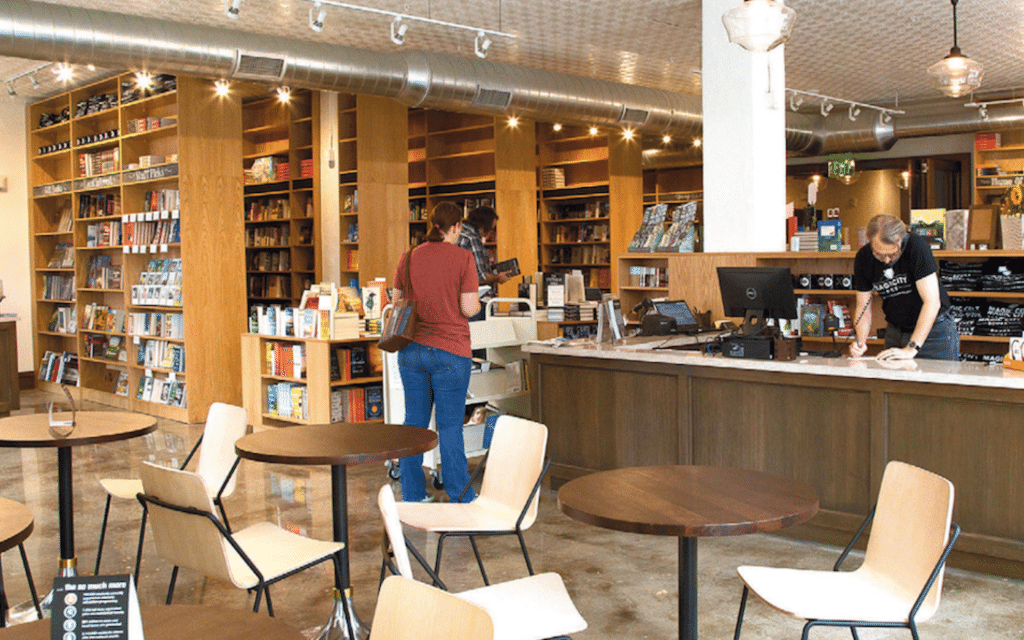
Magic City Books
Bookstore lovers, here’s a real gem for you. The Tulsa Literary Coalition independently owns Magic City Books and has a huge collection of popular and literary fiction. Their goal is to be a third space for locals, so you can expect a cozy and friendly atmosphere while you wander around. They have a ton of author events, and their signed book selection has to be one of the largest I’ve seen yet.
And there you have it—just some of the ways Tulsa may be one of the coolest cities in the world. Do you have anything to add? Let me know below!
The Capital of Route 66
One of the best things about Tulsa is, of course, Route 66. If you can’t tell from “Places to Love,” I’m a huge fan of Mother Road and all it represents!
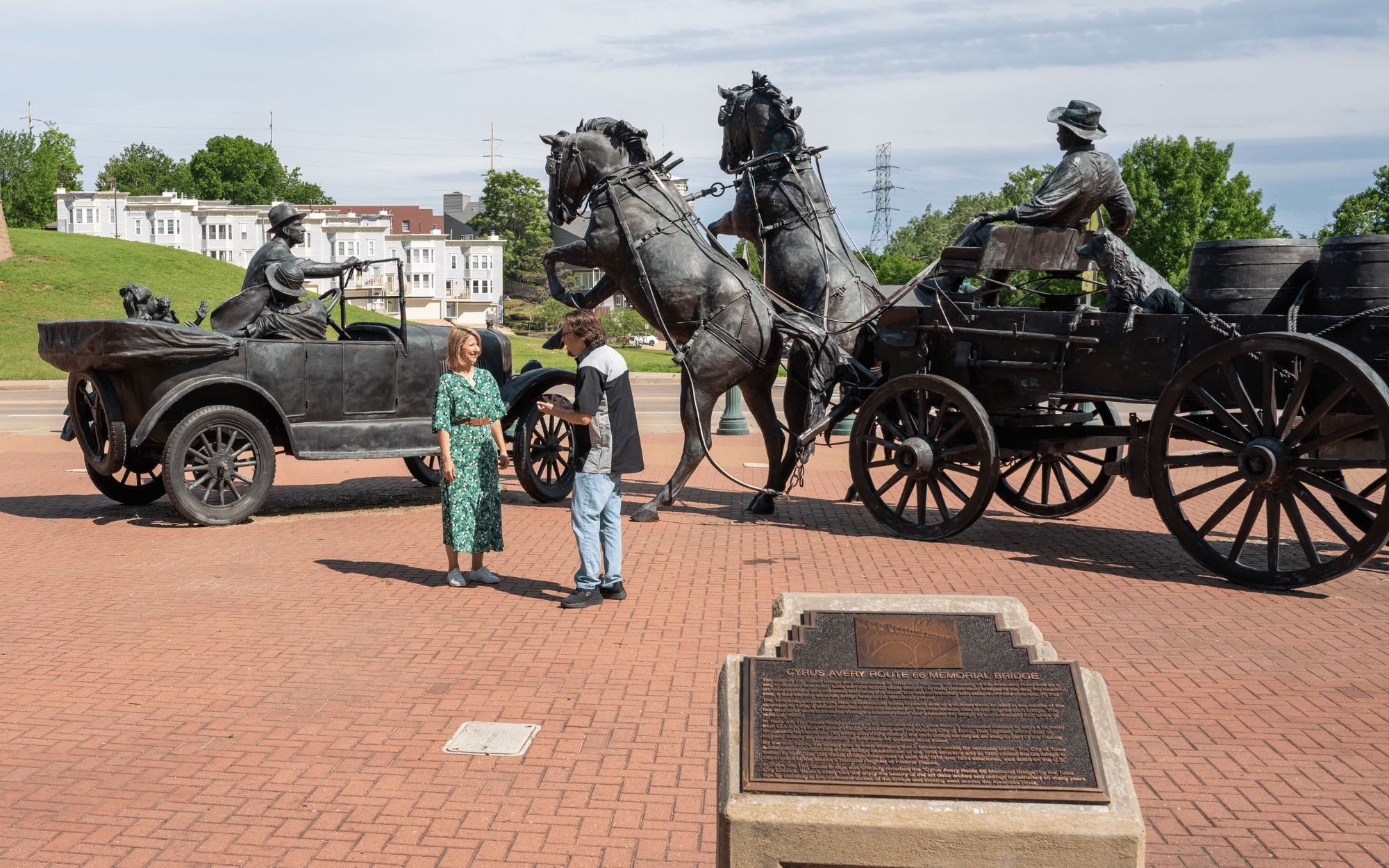
Home to 28 miles of epic highway, its nickname is actually “The Capital of Route 66.” This is because much of the route’s origins lie in Tulsa and one man who adopted this city has his home — oilman Cyrus Avery. Not only was he behind creating the Eleventh Street Bridge, which brought travelers headed west through Oklahoma, he was a proponent of US Highway 66 Association. His vision of a cross-country highway from Chicago to LA makes him “The Father of Route 66.”
Here are some Route 66 stops in Tulsa:
- Howard Park
- Historic Greenwood District
- Cyrus Avery Centennial Plaza & Old Route 66 Bridge
- Buck Atom’s Cosmic Curios
- Meadow Gold Neon Sign
- Route 66 Rising Admiral Landmark
- Meadow Gold Mack the Friendly Lumberjack
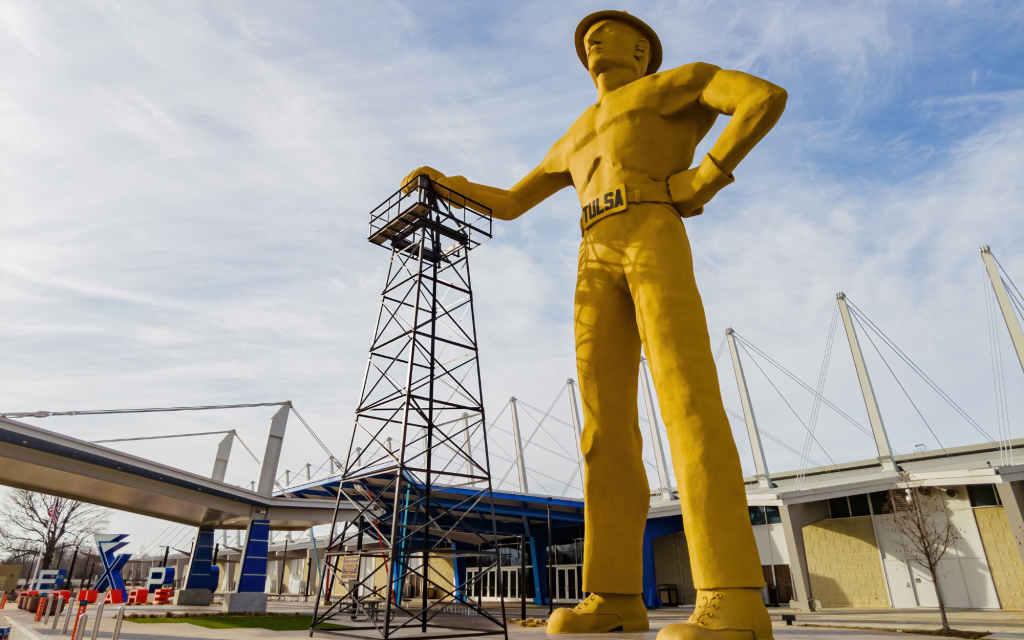
- The Golden Driller
- Woody Guthrie Center
- Bob Dylan Center
- Mother Road Market
- The Admiral Twin Drive-in
- Route 66 Gateway Arches (East & West)
- Route 66 Neon Sign Park
- Desert Hills Motel
A City for Live Music Lovers
You know what really makes Tulsa such a cool place? Its live music scene. Beyond Woody Guthrie and Bob Dylan, music has been deeply embedded in the city’s identity for decades. So much so that it even developed its own genre of music — the Tulsa Sound. Inspired by a mix of genres from blues to country, it evolved between the 1950s and 1960s into something unique and hard to define.
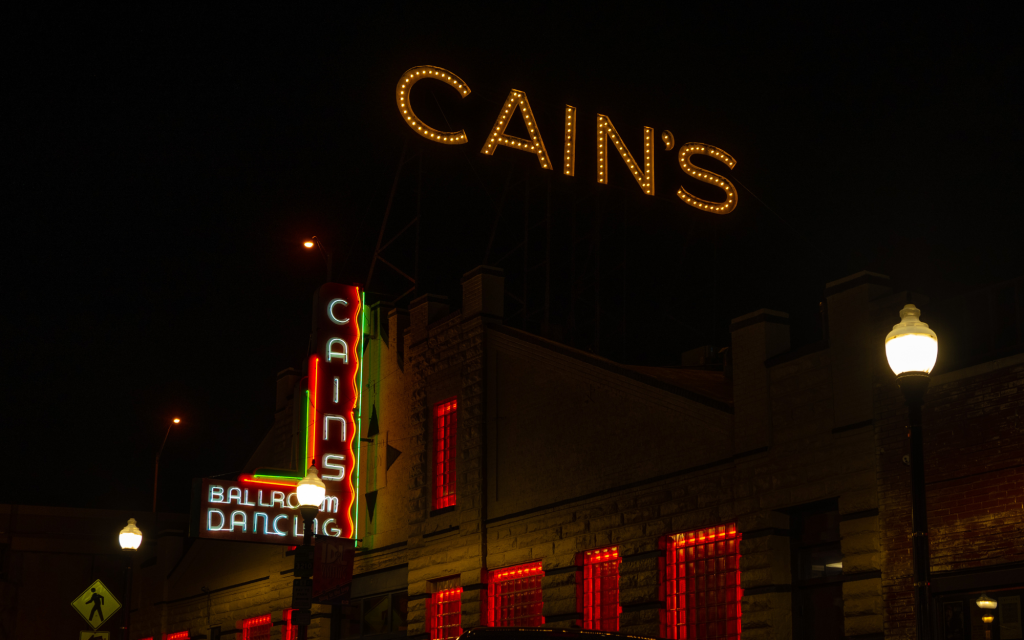
When you visit, just check out any live music offerings. It truly seems like there’s something every day. If you can, try to see a show at the legendary Cain’s Ballroom. It’s been around since the 1930s and is known as “The Home of Bob Wills” and “Carnegie Hall of Western Swing” thanks to his time here in 1935.
And if you really love music, make sure also to visit The Church Studio. Leon Russell founded it in the seventies and has seen the likes of Willi Nelson, Bonnie Raitt, Jimmy Buffett, Tom Petty, and more pass through its doors. You can tour the studio’s museum; if you’re lucky, you might stumble across an actual recording session!
All the Unique (and FREE) Ways to Get Outside
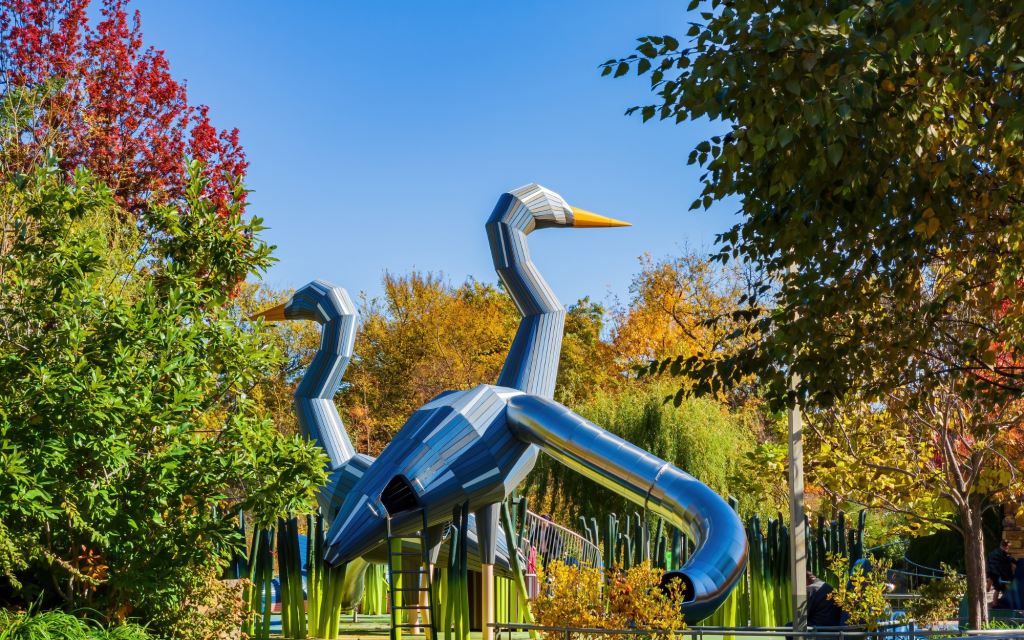
At the end of the day, a solo wellness vacation should be kept simple. The more you overcomplicate it, the less it becomes aYes, you can get outside for free anywhere, but I don’t know that I’ve seen a city invest in its communal outdoor space quite like Tulsa. Gathering Place is an incredible riverfront park with a ton of cool attractions spread over its 66 acres. Think watersports, the most epic playground you’ve ever seen, an area known as Slide Vale, and, of course, a venue for live music.
Another recently opened area is the Tulsa Wave Park at Zink Lake. Here, you can do everything from kayak to tube float to surf. Yes, I did say surf, and yes, this park on the Arkansas River. Surfing on a river! wellness vacation, and the more it becomes an oblication (or obligation vacation!)
All Sorts of 20th-Century American History
When I think about historic places to visit in America, I tend to think about the 1700s when we first declared our independence. However, Oklahoma, and Tulsa especially, have a lot of incredible places that tell the country’s story into the 20th century.
Historic Greenwood District
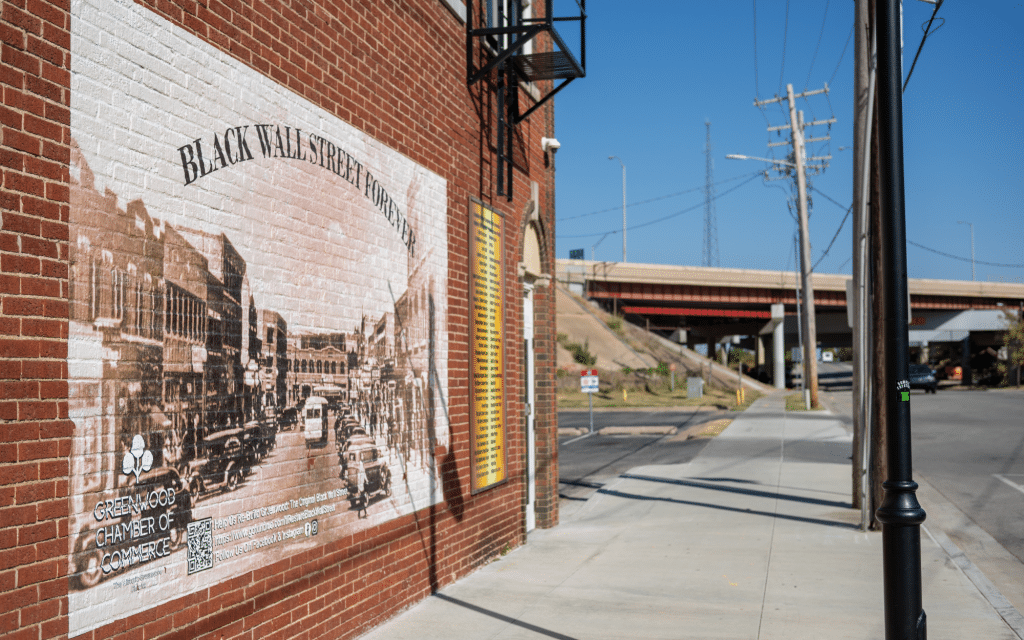
Once upon a time, Historic Greenwood was known as Black Wall Street. The Black community here was once one of the most affluent in the country—so much so that Booker T. Washington visited.
In 1921, however, it would be the setting for what is considered one of the single worst incidents of racial violence in US history. In just a single night, over a thousand homes and businesses were destroyed while 300+ people were murdered in what’s now known as the Tulsa Race Massacre.
These days, entrepreneurs and locals are working to rebuild the district and educate visitors about the massacre and Greenwood’s prosperity. Visit Greenwood Rising to learn more, and then pay your respects at the Black Wall Street Memorial.
The Philbrook Museum of Art
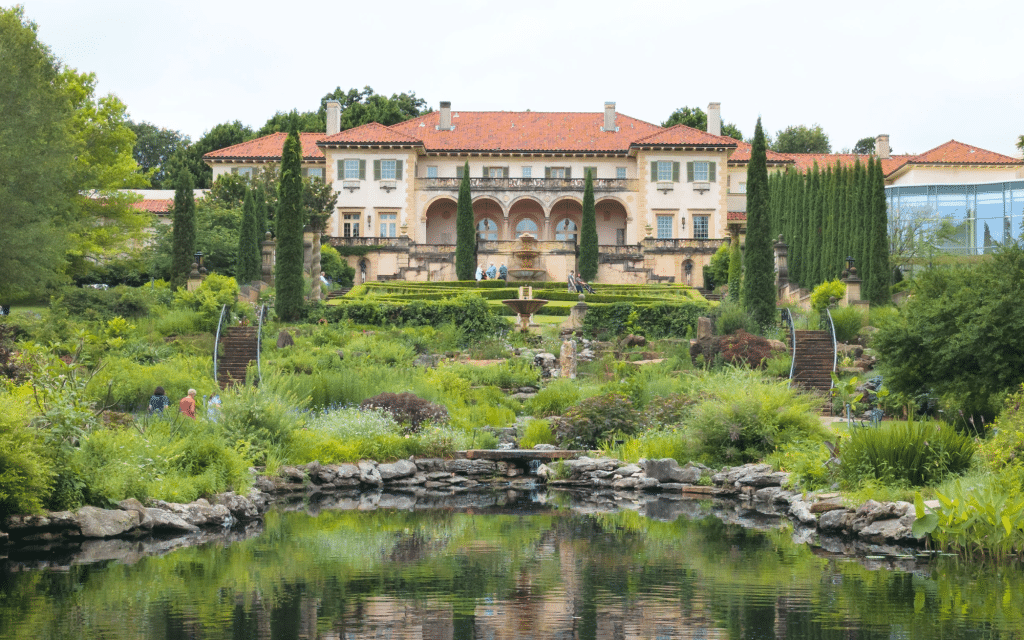
One of Tulsa’s most beautiful landmarks, the Philbrook Museum of Art, represents two things. The first is just how wealthy many families became thanks to oil, and the second is the indulgence of the Roarin’ Twenties in Oklahoma.
Philbrook gets its name from Waite Phillips. He was the youngest of the brothers who founded the Phillips Petroleum Company (you’d recognize their Phillips 66 logo). After selling his interest to his brothers, he started his oil production and headquartered his company in Tulsa. One of his many buildings was this 72-room Italian Renaissance-style mansion. It was initially his home, but Phillips donated it to the city during the Great Depression, and it’s been an art museum since.
Not only are the museum and surrounding gardens works of art themselves, but the collection is massive, with pieces ranging from Native American to European.
Bonus: keep an eye out for Philbrook’s garden cat, Cleome!
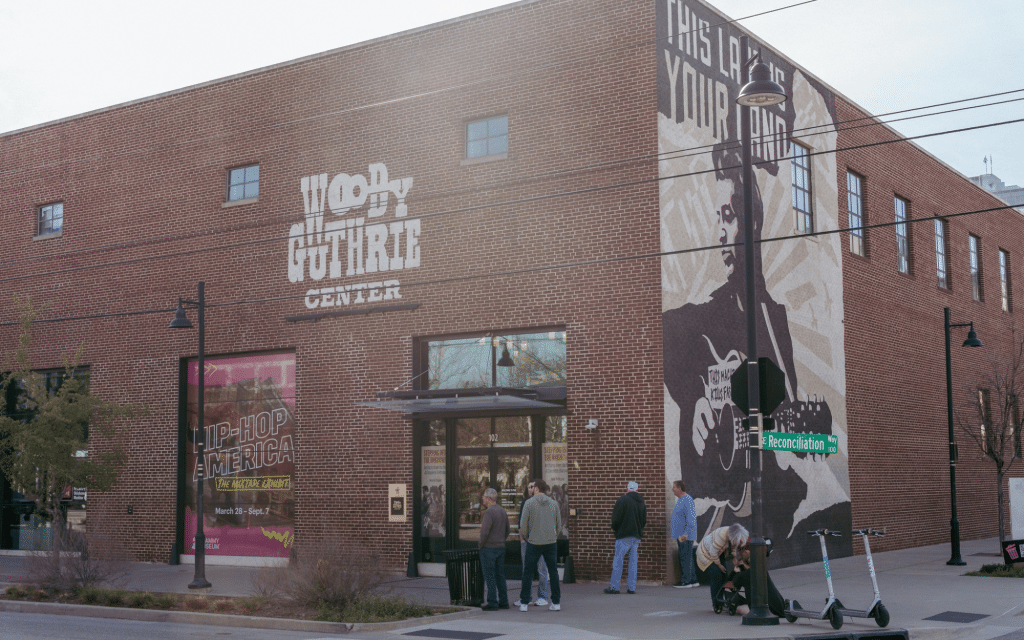
Woody Guthrie Center
One of the greatest voices of the early 20th century, most of us know legendary folk singer Woody Guthrie for “This Land is Our Land.” In his lifetime, he penned thousands of songs and told a different kind of American story. Whether shedding light on Dust Bowl migrant suffering, breaking through segregation by traveling with Black musicians, or fighting against the rise of fascism, Guthrie was consistently a voice for the disenfranchised and underrepresented.
The Woody Guthrie Center is not only a great way to learn about the musician and his impact but also about the time periods that inspired his music.
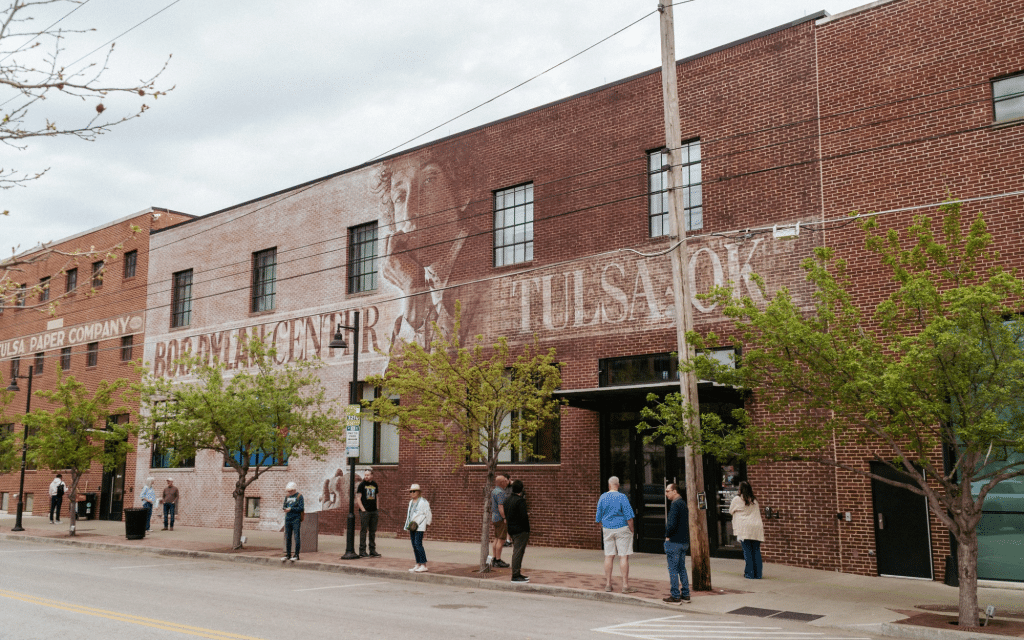
Bob Dylan Center
The Bob Dylan Center is literally right next door and picks up where Guthrie’s center leaves off. Just like Guthrie’s music represents what was happening in the early 20th century, Dylan’s music represents what was happening in the latter half of the 20th century. Through themes of pacifism, anti-racism, and socioeconomic inequality, his songs spoke to a generation growing up in a time of incredible uncertainty.
Through its 100,000+ archival items, the center tells not Dylan’s songwriting journey but the historical moments and movements that inspired him.
Pin for later!
Comments (1)
Leave a Reply
Related Posts



Samantha,
I am extremely happy and excited that you finally did a show on my hometown of Tulsa! Tulsa is such an amazing and vibrant city. Through the amazing zoo, its parks, woodlands, great shopping places, great restaurants, ( Tulsa Coney hotdogs do not put ketchup on their hotdogs!) Art deco buildings. It is and will always remain a music city. So many great musicians come from this great city. And, its rich oil history. It has a small town feeling even though your in a cosmopolitan forward thinking city that is only getting bigger and better in so many ways. Hollywood has finally realized how big Tulsa is in supporting movies being filmed her. But, the thing I am sure you noticed is the most special thing about Tulsa is the great people who live there. And, the amazing ethnic groups you have there is unbelievable. You meet a Tulsan, you meet an honest, down to earth and extremely friendly person. Samantha, I am happy you finally got to come to a city that is and has always been on the move. Your welcome to visit our great city anytime.