Williamsburg, Virginia
Dust off your junior high American history notes and travel back to the beginning of our country in Williamsburg, Virginia – where history is still being uncovered and rewritten every day. While the city’s museums and history can make it feel frozen in the 18th century, it is also youthful, diverse, and ever changing. New artifacts and discoveries are being made daily that reshape the story of our country’s earliest days. Filling in these missing pieces helps us better know who we are as a people and a country.
My own visits to Williamsburg as both a child and an adult reflect a similar change – from simply accepting history to questioning it and realizing that each new discovery brings us closer to a fuller understanding of our past.

PLACES AND STORIES TO LOVE
NEW DISCOVERIES SHAPING OUR HISTORY
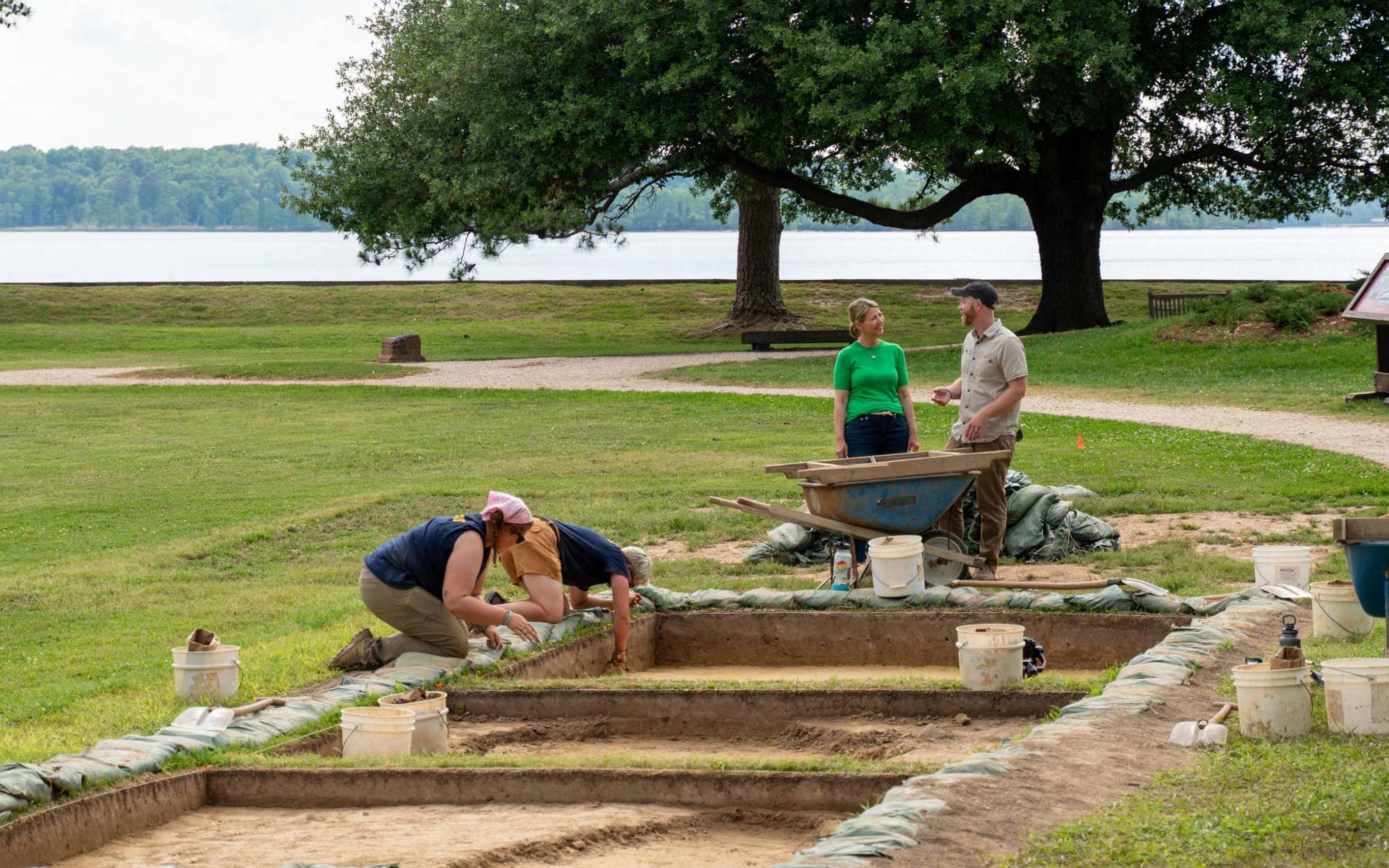
What better place to begin a trip back in American history than to Historic Jamestowne, home of the first permanent English colony. Beautifully located along the coast, Jamestowne served as the capital of the Virginia colony until 1699, when the capital was then moved to Williamsburg. Historic Jamestowne is an active archeological site and open-air museum. I had a chance to meet up with Sean Romo, Director of Archeology, to discuss the discoveries being made every day and how they impact what we know about the colonists and the beginning of our country.
FUN FACT
A sealed 16-foot deep well at Jamestowne provided more than 120,000 artifacts and gave archeologists a look at daily life for early colonists from the winter of 1609-1610, or the “Starving Time,” as it is cheerily referred to.
CONTACT
CHAT WITH PATRICK HENRY HIMSELF
It’s a short trip from Historic Jamestowne to Colonial Williamsburg, the world’s largest living history museum, and in 1699, it became the new capital of the Virginia colony. While walking around the 301 acres, visitors feel fully immersed in every aspect of Colonial life. Whether eating traditional food in the many restaurants and taverns or seeing how trades like the apothecary and blacksmith worked at the time, every square inch is alive with the past.
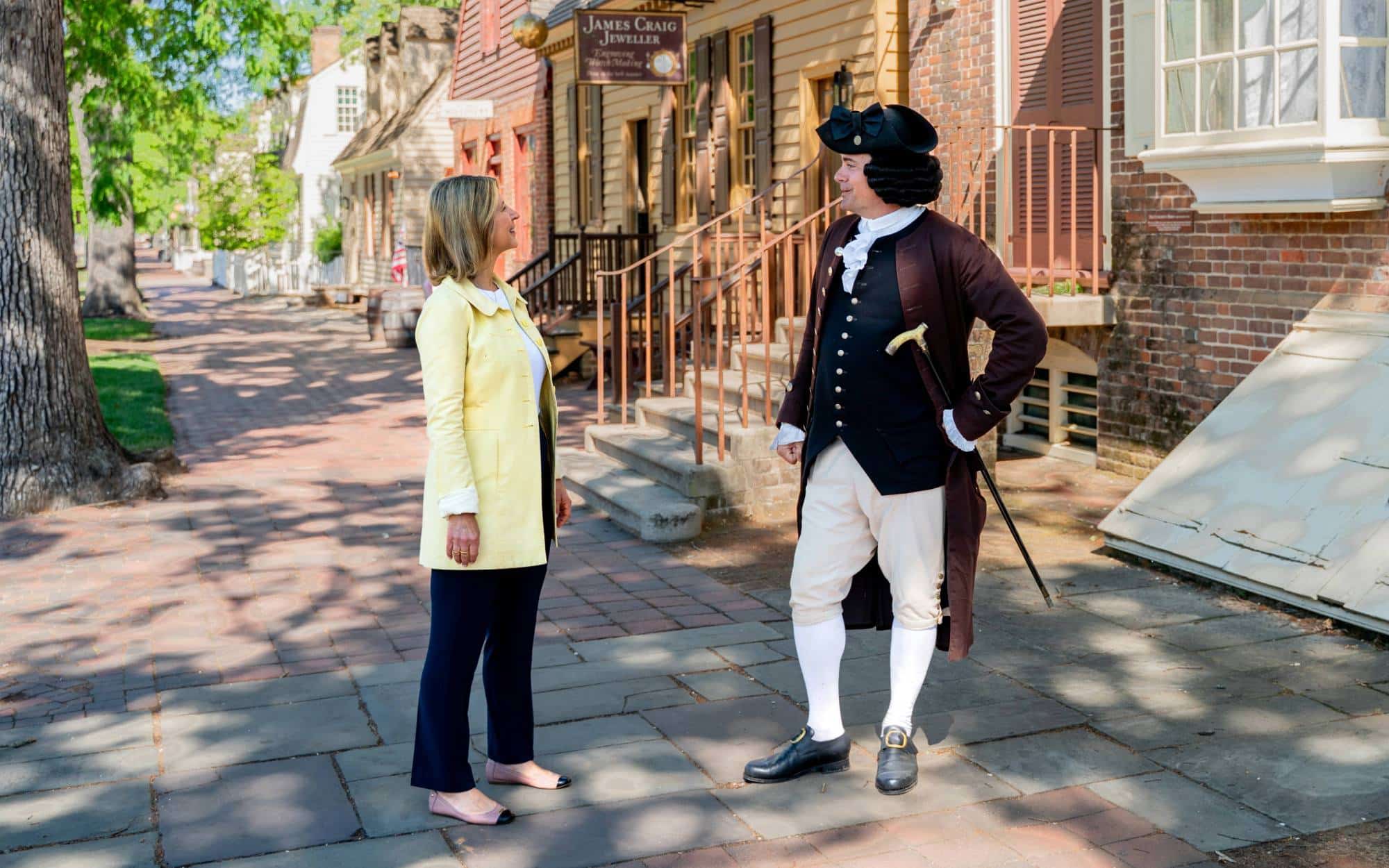
If you’re lucky, you may even bump into historic icons like Patrick Henry while he just happens to be at the wig maker to get his wig buckles (the tight curls at his temples) fixed before a big speech. I was lucky enough to have such an encounter with Nat Lassley, a nation builder, who portrays Patrick Henry, and Debbie Turpin, master wig maker. Nat and I spoke about the duality in portraying these historical figures who were great politicians and brilliant public speakers, but simultaneously often flawed people, especially when looking through the lens of today.
FUN FACT
In 1986, Colonial Williamsburg founded its Rare Breed Programs which preserve and promote genetic diversity in the livestock that was common in 18th-century Colonial America, like the Leicester Longwool sheep, American Milking Red Devons cattle, and poultry.
CONTACT
FLAWED EDUCATION
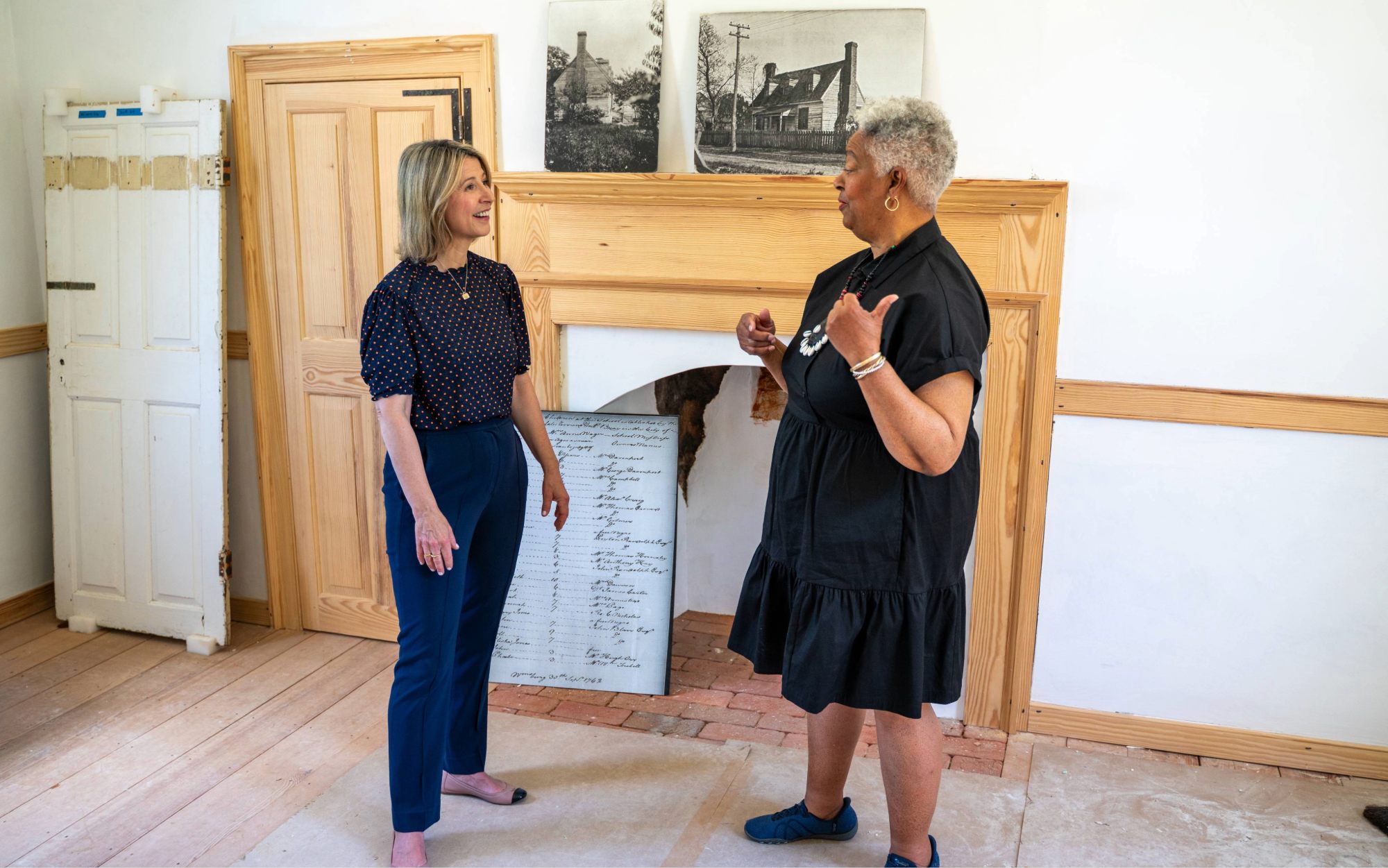
Now located back on the campus of Colonial Williamsburg, the Bray School served to educate free and enslaved African-Americans in Virginia from 1760 to 1774. While students at the Bray School were taught reading, writing, math, and catechism, its flawed mission was to convince enslaved students that it was their divine purpose and role to serve their masters as slaves.
One unintended, and positive, consequence of their education was that the children would share their knowledge with other kids and community members who weren’t chosen to attend the school. Janice Canaday spoke to me about her ancestors that attended the school and how learning its history filled in the missing gaps of information in her own personal history.
DID YOU KNOW?
The original building for the Bray School was missing for over 200 years, but it was actually hidden in plain sight just a few miles down the road at the College of William & Mary. It was rediscovered in 2021 and moved back to its original location.
CONTACT

LET FREEDOM RING!
Spending time in Williamsburg, you’ll find there’s no shortage of historical sites and new discoveries being unearthed every day. Just a few steps from the Bray School is one of the most significant archaeological projects in the country – the First Baptist Meeting House and Cemetery. This project is tasked with uncovering the foundation of one of America’s oldest African-American churhces, as well as the gravesites of its first congregants.
I met with Connie Matthews Harshaw and Johnette Gordon-Weaver, congregants of the First Baptist Church. Harshaw is President of the Let Freedom Ring Foundation, an organization that helps preserve and protect the historical significance of the First Baptist Church and its legacy, while Gordon-Weaver can trace her ancestry back to late 1600s Williamsburg. We spoke about the discovery and excavation of this site and the challenges to finding historical sites whose information was only preserved through oral history.
WHEN YOU VISIT
Visitors are welcome to ring the church’s bell as part of the organization’s mission for racial healing and education. The bell’s ringing is a sound of hope and American freedom for everyone.
CONTACT
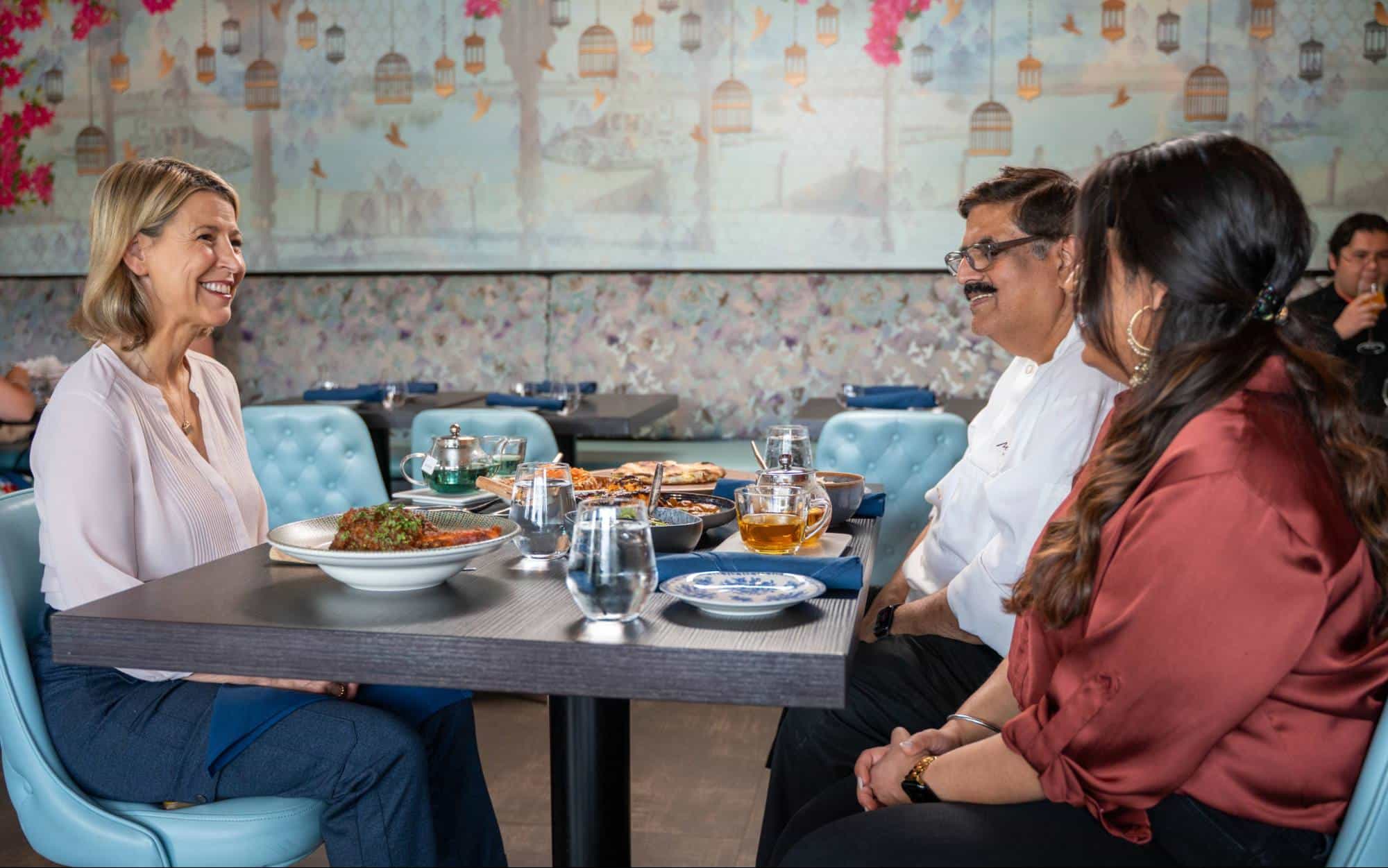
MIXING TRADITION WITH INNOVATION
Despite being surrounded by history and artifacts, the city of Williamsburg is filled with diversity and youth, especially in its culinary scene. The Arora family brings that diversity and youthful whimsy to its family owned restaurant Masala Craft Indian Kitchen, where dad Avinash is the executive chef. He cooks traditional recipes learned from his mother and grandmother in Punjab while his daughter Shaveta puts new spins on these dishes, pushing the traditional ideas of Punjabi cooking. I sat down with them both and was fortunate enough to try their delicious food and talk about their mission to showcase what India is one dish at a time.
FUN FACT
Neeta Arora, Avinash’s wife and Shaveta’s mom, is the backbone of this family owned restaurant. She can be found most days welcoming guests to the restaurant, and boy is she good at her job! Don’t be surprised when she remembers what you ordered last time you were here… even if you can’t!
CONTACT

PRESERVING MUSICAL HISTORY
There’s more than just colonial history being preserved in Williamsburg, and the Virginia Musical Museum is proof of that. Buddy Parker has been an avid collector of musical instruments over the last 50 years and it all began with a music box. The museum’s collection showcases the evolution of how we enjoy music – from live music to the various ways we have listened to music at home over the decades, including Edison’s tin foil machine and phonograph. I had a chance to visit and talk to Buddy about his collection, as well as the museum’s Virginia Music Hall of Fame.
FUN FACT
Wayne Newton, June Carter, and Pearl Bailey are just a few of the musicians with Virginia roots in the museum’s Music Hall of Fame.
CONTACT
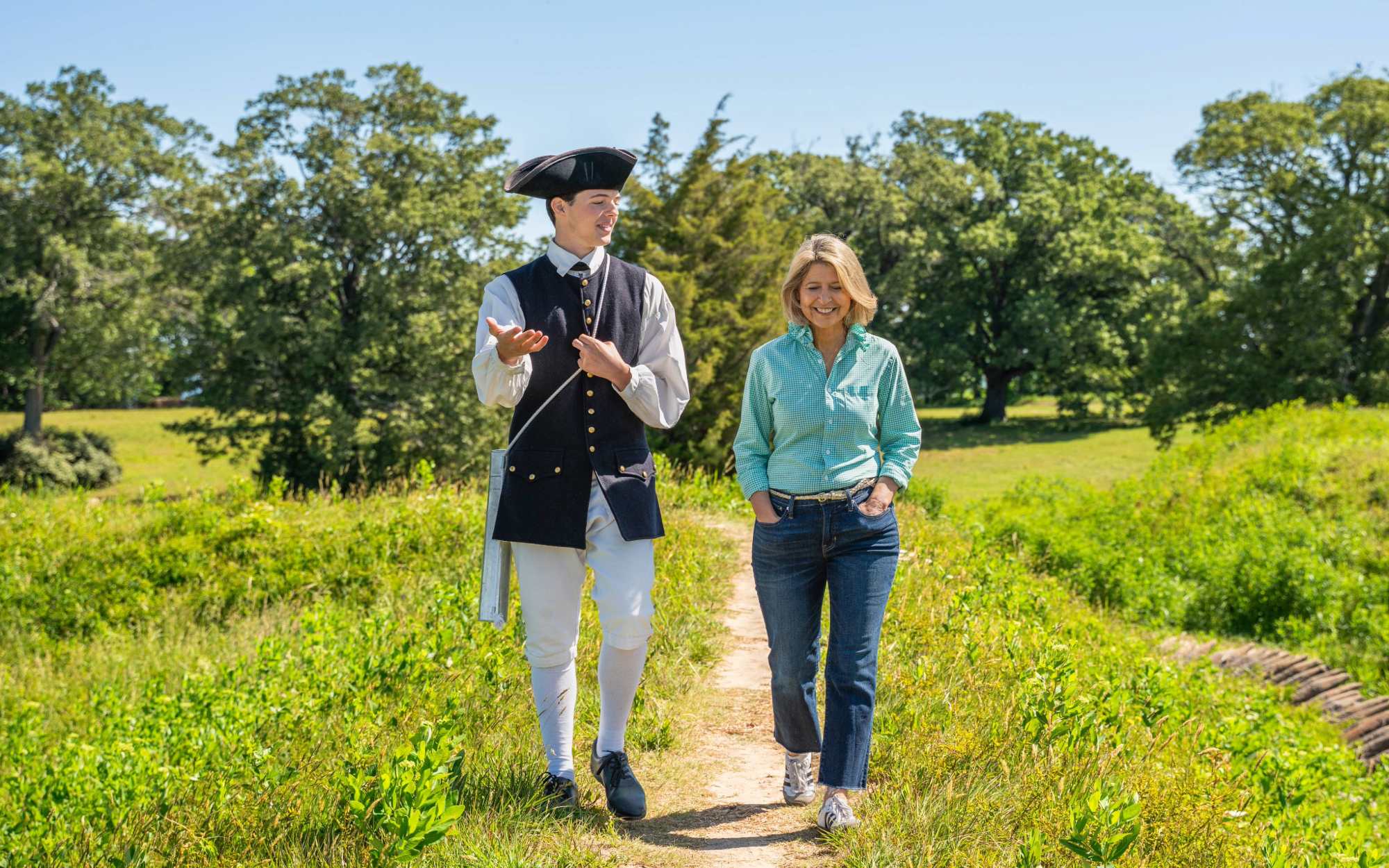
ENDING THE REVOLUTIONARY WAR
Fifteen miles from Williamsburg lies Yorktown – an iconic place in American history that served as the setting for the Battle of Yorktown, marking the end of the American Revolutionary War. It was here that British General Cornwallis surrendered his troops, effectively securing American independence. Visitors can tour the 3,500-acre battlefield, as well as the Moore house, where the surrender terms were negotiated. I took a ride in the Yorktown & Co. Stanley Steamer, a quick and breezy way to naviagate the battlefield! Gabriel Gucanac was kind enough to show me around the battlefield’s key locations. He also educated myself and my entire crew on the very important role the fife and drum played in spreading communication and battle plans amongst the troops.
FUN FACT
During the fighting at Yorktown, Alexander Hamilton led a successful effort to capture Redoubt 10, a vital fortification at Yorktown, only using his bayonet and never firing his gun.
CONTACT

HISTORY COME TO LIFE
A visit to Yorktown isn’t complete without visiting the American Revolution Museum, which tells the story of the nation’s founding. This living museum has three parts – an indoor museum with exhibits and galleries, an outdoor Continental Army encampment, and a revolutionary-era farm. Visitors can be fully immersed in the life of colonial soldiers and learn about medical treatments and camp life. I spent my time exploring the encampment and was joined by Gretchen and Avery Johnson, as well as Alicia Klimenko, living history interpreters that showed me what life – and medical care – was like on the battlefield.
For more information on the sites I visited, and to plan a trip of your own, check out Visit Williamsburg’s website!
FUN FACT
Once a year, the American Revolution Museum hosts a naturalization ceremony. This is the final step of the long, committed journey for those wishing to become an American citizen.
WHEN YOU VISIT
Be sure to check out the museum’s movie The Siege of Yorktown in the Siege Theater – a fully immersive theater that features a 180 degree wrap-around screen, surround sound and special effects that let visitors feel the intensity of the final battle.
CONTACT
Like this post? Pin for later!