Route 66: California
It took more than 2,400 miles, 8 states, and 3 seasons, but we’re finally finishing our maiden voyage of the Mother Road, Route 66. What started in Illinois as a lighthearted road trip became something more, as I felt drawn to keep going and discover what truly made Route 66 special. I’m so glad I followed that instinct. I was able to drive through towns and discover the personality of not only the road but the people and places it connects. The California span of Route 66 consists of 315 miles and starts with wide open spaces in the Mojave desert and continues through towns that tell the story and history of America. So let’s ring that bell, because we’re crossing the finish line in Santa Monica, California – but not without an epic finale!
In Season 7, I drove through Illinois and then in Season 8, I drove from Missouri to Oklahoma and then Oklahoma to Texas. Season 9 started in New Mexico, passed through Arizona, and the Golden State is my final stop!

PLACES AND STORIES TO LOVE
THE TOWN STEAM ENGINES BUILT
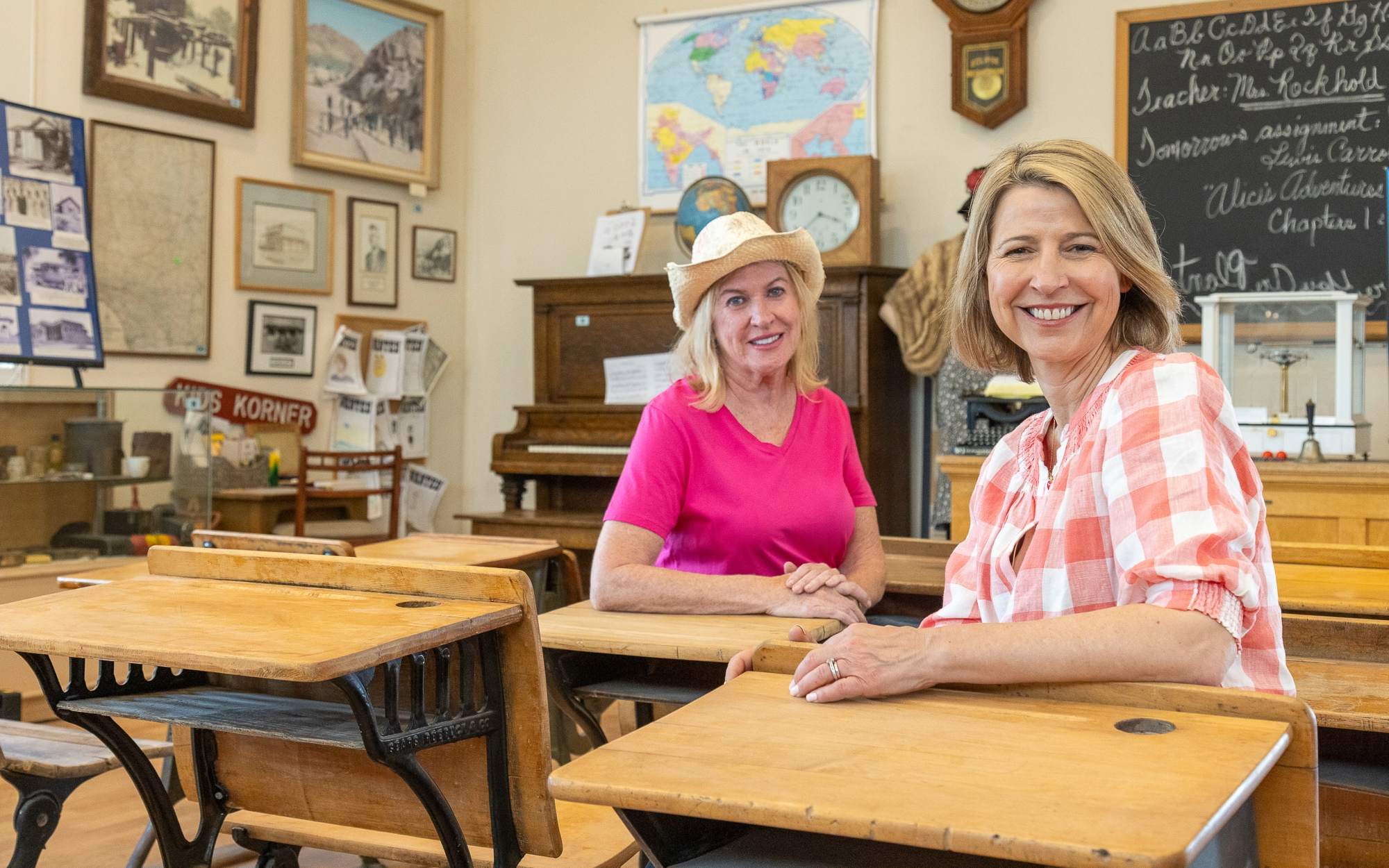
Founded in 1883 to service steam engines traveling across America, Goffs, California developed around the railroad’s need for water. As the railroad company dug wells for the trains, it also created a reliable water supply that supported the town’s growing population. In 1914, Goffs Schoolhouse was built not only to educate the town’s children, but also to serve as a community center for gatherings, dances, and religious services. It was even used as General Patton’s Desert Training Center and trained more than 10,000 US Army soldiers for desert warfare in Africa.
As the schoolhouse was abandoned and deteriorated, volunteers stepped in to rebuild it and restore the archives. Laura Misajet, Director of Museum Operations and Public Outreach and the Mojave Desert Heritage and Cultural Association sat down with me to discuss the importance of preserving this piece of American history.
FUN FACT
The primary classroom housed grades 1 through 8 and had only one teacher for all eight grades. The teacher lived in a small building just east of the schoolhouse.
CONTACT
REBUILDING A GHOST TOWN
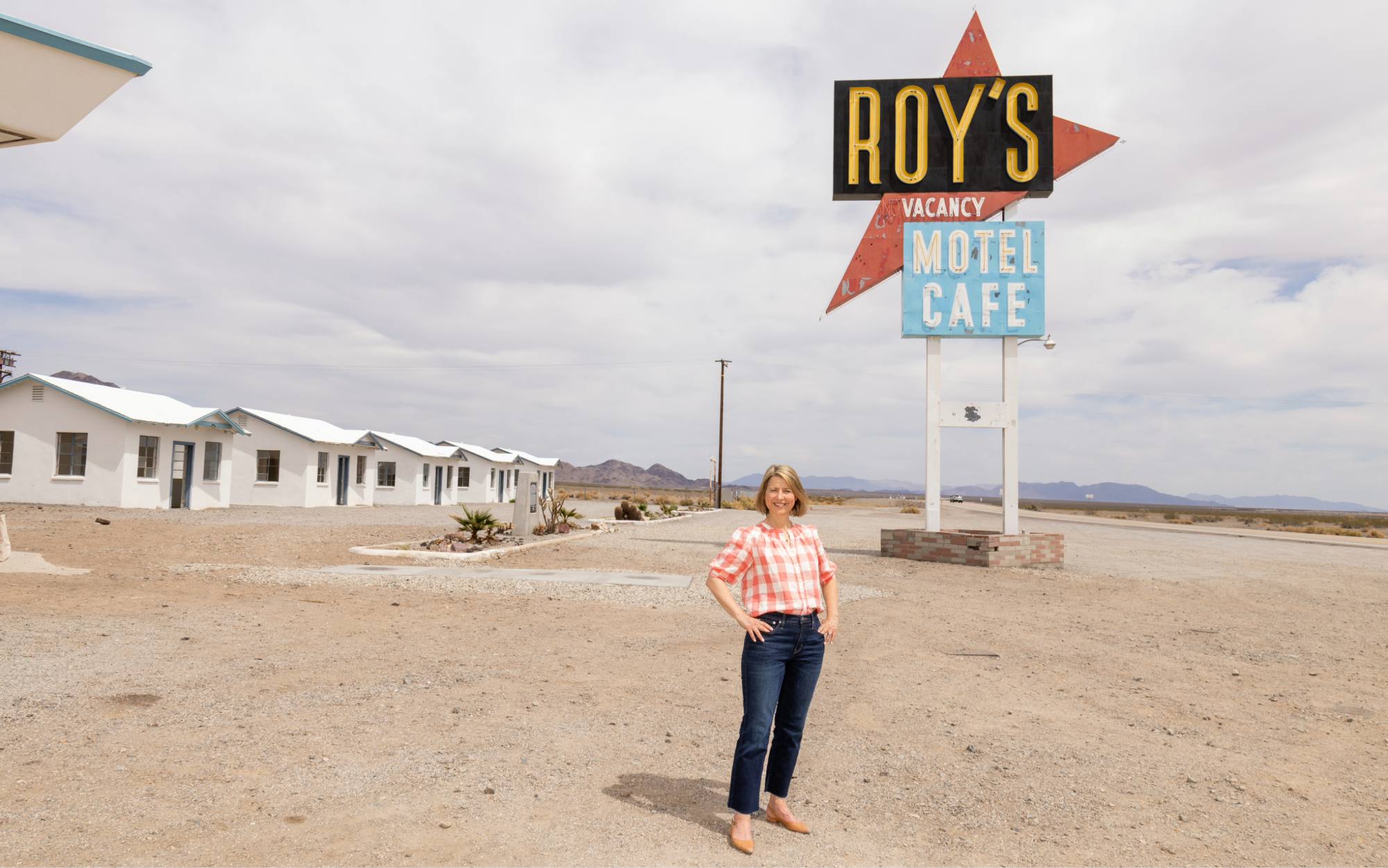
Driving through the Mojave Desert offers wide, uninterrupted views that stretch for miles, revealing every hill and curve ahead. Stay on the road long enough and an iconic burst of color appears on the horizon. As it grows larger than life, you know you’ve arrived in the presence of Route 66 royalty – Roy’s Motel and Café. Roy Crowl and his wife Velma built Roy’s as a service station to serve the travelers along this barren stretch of Route 66. It later expanded into the well known Motel and Cafe where it provided lodging as well as a sense of community in the small town of Amboy, California.
Now a literal ghost town with a population of 0, owner Kyle Okura reopened the gas station and has plans to open the Motel in time for the 100 year anniversary celebration of the Mother Road. We spoke about the town and how important it is for travelers from all over the world to have a chance to visit and experience the nostalgia of Roy’s Motel and Cafe.
FUN FACT
The larger than life Roy’s Motel and Cafe sign is considered the most photographed sign along Route 66, so be sure to stop and get a selfie. It’s not shy!
CONTACT
THE EAGLE, GLOBE, AND ANCHOR
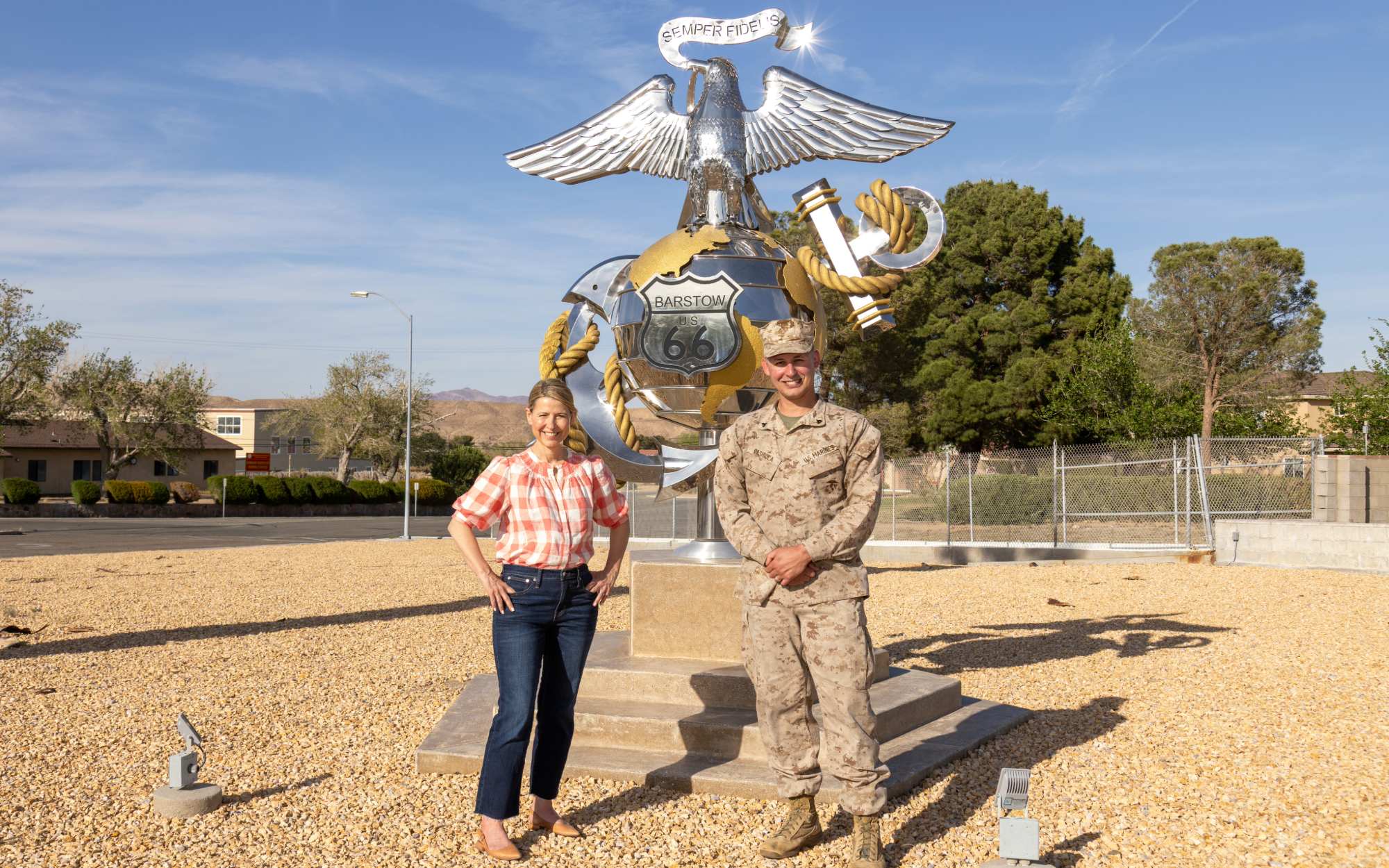
Continuing on from Amboy through the desert, you’ll come across the only stretch of Route 66 not open to passing traffic, and the only stretch that runs straight through a Department of Defense military base – Marine Corps Logistics Base Barstow. MCLB Barstow was established by the Department of the Navy as a strategic place during World War II to rest and stage Marines on their trip across the country to ports along the West Coast.
Today, the base’s mission is to rebuild and repair ground and combat support equipment. I was allowed on base and spoke with Corporal Anthony Cahiola, Operations NCO, on the importance of Route 66 during World War II and throughout the history of America’s expansion.
FUN FACT
The iconic “Route 66” song was written by Bob Troup, a United States Marine.
CONTACT
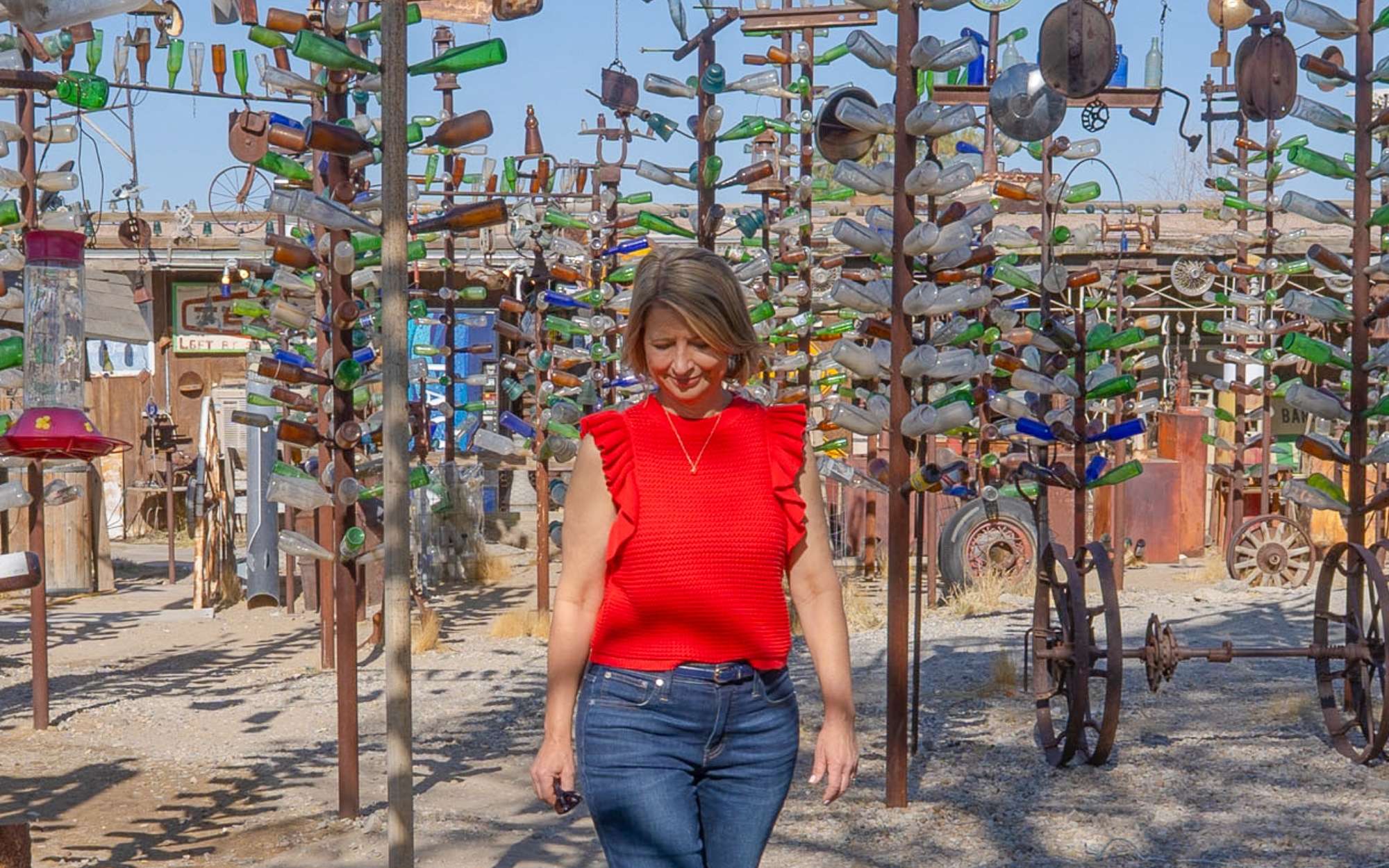
ONE MAN’S TRASH IS ANOTHER’S TREASURE
On a sunny day, the gleaming sparkle from Elmer’s Bottle Tree Ranch will certainly grab your attention. It’s a dazzling, must-see stop and a great place to take a colorful break from the road while you wander through this forest of bottles and art. Begun by Elmer Long, everything you see at the bottle forest was created by using items he and his father found while camping throughout his childhood. Visitors are encouraged to continue his legacy by bringing their own glass bottle to add to the vast expanse of bottles already on display.
WHEN YOU VISIT
Be sure to look for the bottle boat and the tree made from an old missile!
CONTACT
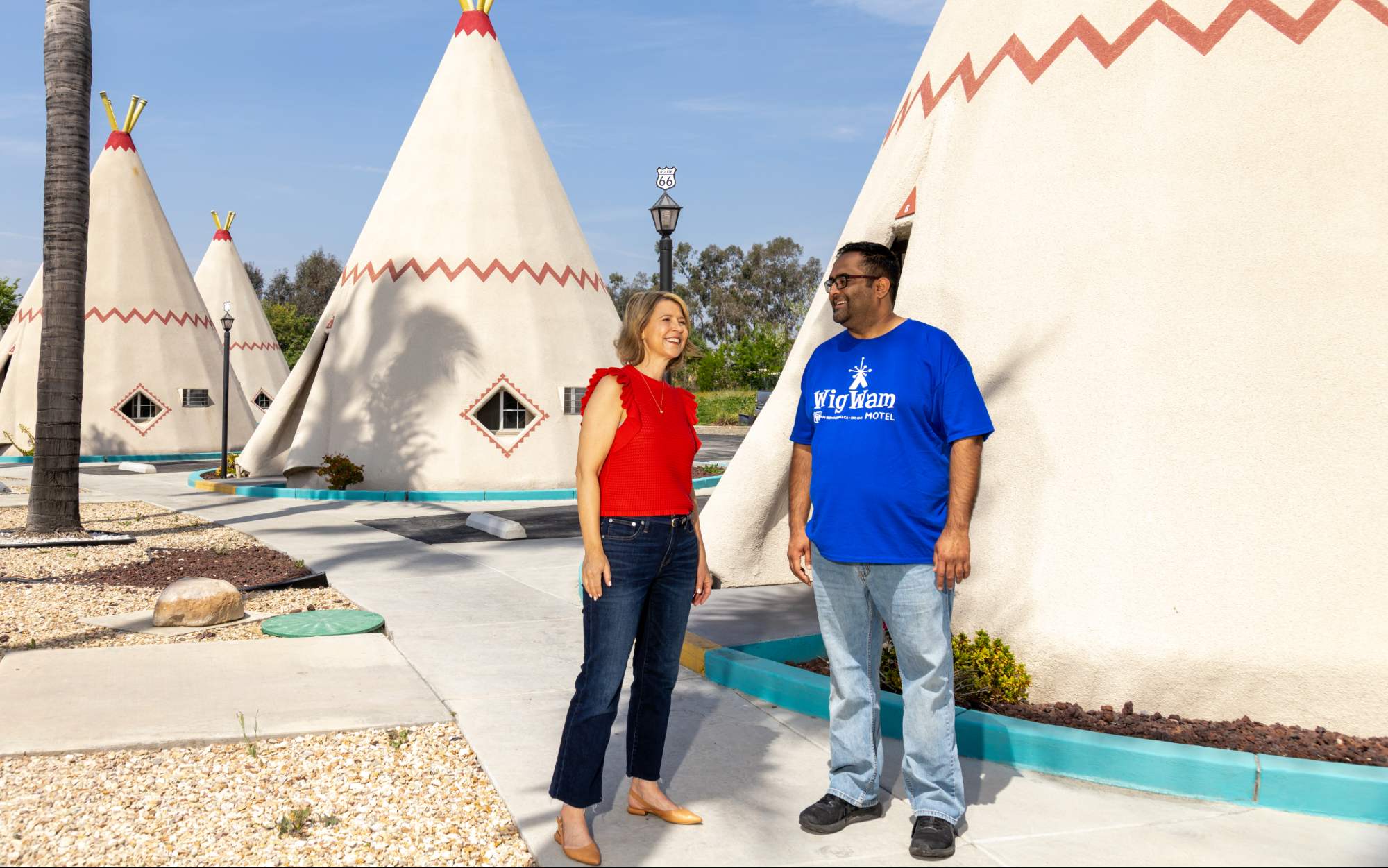
CHANGING THE SHAPE OF MOTOR LODGES
As the Mother Road takes you out of the expansive Mojave desert, it transforms from barren desert landscape into bustling city streets – but that doesn’t mean the history along Route 66 disappears. Instead, it becomes more concentrated in the restaurants, hotels, and roadside attractions that still invite travelers to stop and explore. One such way to experience this history firsthand is to stay at one of the route’s most iconic motor lodges: the Wigwam Motel.
California is known for being the birthplace of the motor lodge, and wigwam motels changed the accessibility of travel for everyday people. Hotels were no longer for the wealthy, but for any family driving across Route 66 looking for an inexpensive place to stay for the night. As one of those families who took to the road, I was so excited when Samir Patel, whose family has owned the Wigwam Motel for more than 20 years, showed me the original kidney shaped pool. My inner child wished she’d brought her bathing suit.
FUN FACT
Two out of the three remaining Wigwam motels are along Route 66 – one in San Bernardino, CA and the other in Holbrook, AZ.
CONTACT

FILL ‘ER UP
What’s more quintessential Route 66 than a retro service station with classic cars lined up out front? The Historic Richfield Cucamonga Service Station still serves as a beacon for classic car owners and Route 66 lovers alike. It began as a lone focal point in the area, surrounded by vineyards and citrus groves. Many of its early visitors were refugees from the Dust Bowl coming to California for a fresh start.
Its iconic building has been fully restored by volunteers and, when you’re there, you feel like you’ve stepped back in time. Anthony Gonzales, President of the Route 66 Inland Empire California Association, and I spoke about the history of such an iconic place and the determination of all the volunteers to restore it to its former glory. If only gas was still 17 cents a gallon!
FUN FACT
The Historic Richfield Cucamonga Service Station was used as the backdrop for the music video “Livin’ Rancho Cucamonga” to celebrate the 50th anniversary of the City of Rancho Cucamonga.
CONTACT

CLASSIC ARCHITECTURE ON DISPLAY
Nestled in a Pasadena neighborhood, you’ll come across another must-see stop along Route 66. But this stop is different from the big neon signs and roadside oddities I’ve visited so far. The Gamble House is a beautiful example of the American Arts and Craft style of architecture that was so popular at the time.
Built in 1908 for David and Mary Gamble of the Proctor and Gamble Company, it celebrates the beauty of natural wood and Japanese architecture. Outdoor sleeping porches used by the family reflected the desires of many from the Midwest – fleeing the industrialized air of home to embrace the cleaner, open spaces out West. Sheryl Scott, Director of Communications and Operations at Gamble House, spoke with me about the uniqueness of Gamble House and how it celebrated the car culture of the time.
FUN FACT
Do you know what a Flux Capacitor is? Does your Delorean go 88 mph? Then you may recognize the Gamble House and its distinctive garage as Doc Brown’s residence in the 1985 film Back to the Future.
CONTACT

IF THESE WALLS COULD TALK
Looking for a legendary place to stop and grab a delicious bite to eat? Look no further than *THE* Hollywood hangout of the Golden Era, The Formosa Cafe. Located across the street from the then Samuel Goldwyn Studio, The Formosa Cafe was a refuge for celebrities who wanted to go out without being hounded by reporters and paparazzi. This was the place where it all happened!
I sat down with Max Shapovalov, historian for The Formosa Cafe, as he told me so many amazing stories, like the time Elvis Presley gifted a Cadillac to a waitress. Or when John Wayne fell asleep at his table and had to sleep there overnight. The owner actually found him cooking breakfast in the kitchen the next morning! We also discussed the importance of The Formosa Cafe’s decor and how it paid homage to Asian American actors at a time when they didn’t receive notoriety or acclaim.
FUN FACT
Some say The Formosa Cafe may be haunted by the celebrities who frequented it. Bartenders have reported hearing Frank Sinatra’s “New York, New York” playing repeatedly late at night when no music was playing.
CONTACT
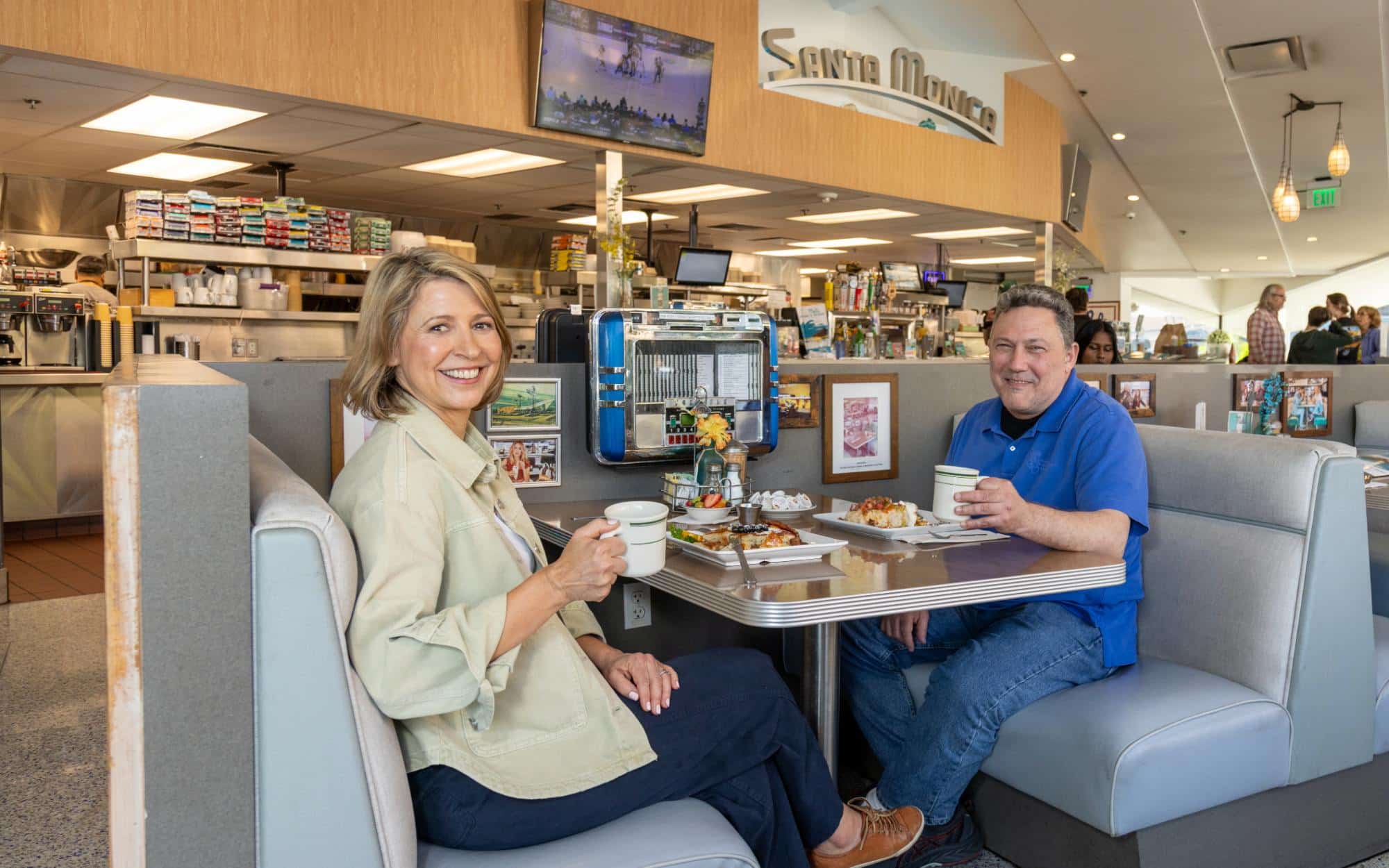
RING! THAT! BELL!!
While there is some debate on the true end point of Route 66, there’s no better feeling than pulling into Mel’s Drive-In and ringing that bell! Located at the corner of Lincoln and Olympic Boulevards, Mel’s is at the official end of Historic Route 66. It is the perfect place to celebrate finishing the long, sometimes arduous, drive along the Mother Road.
I sat down for one last meal with Scott Piotrowski, President of the California Historic Route 66 Association, and we discussed the call so many people feel to travel the 2,448 miles of Route 66. Created a century ago as a highway of freedom for Americans traveling across the country, Route 66 carried people for many different reasons – whether fleeing hardship, seeking a fresh start, embarking on a family vacation, or simply chasing the nostalgia that continues to define the road today.
DID YOU KNOW?
While Mel’s Drive-In in Santa Monica is known for being the official end of Historic Route 66, its other location in San Francisco was featured in the 1973 movie American Graffiti.
CONTACT
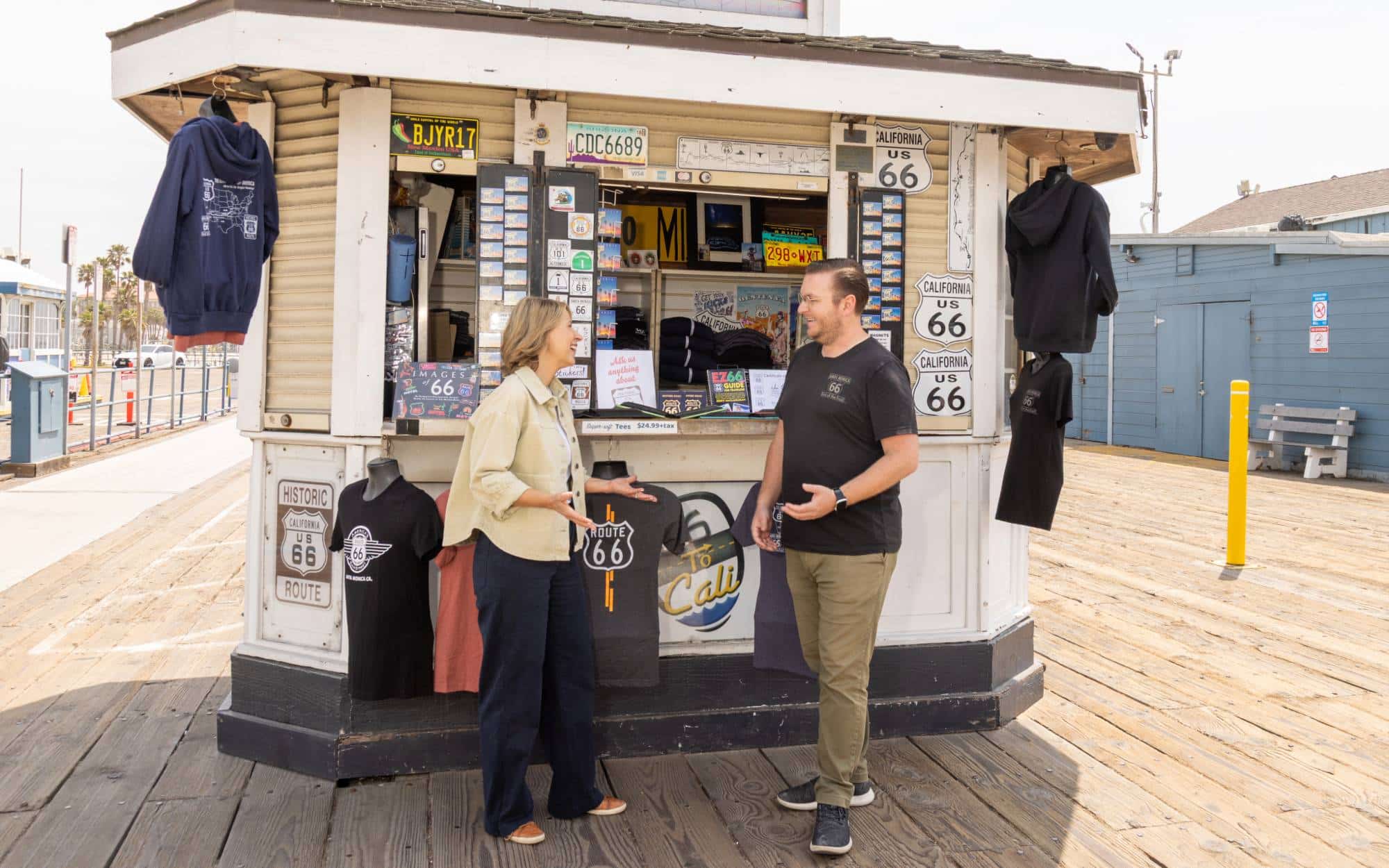
THE CELEBRATION CONTINUES
There’s one last stop of celebration at the unofficial, or spiritual, end of the Mother Road – the Santa Monica Pier. As the colorful pier comes into view against the vast Pacific Ocean, you can’t help but slow down and take in the journey that brought you here. You did it! You’ve crossed the finish line. And boy what a celebration awaits you here – roller coasters, carnival games, and delicious food.
The Pier has the sights and sounds of a real celebration worthy of the journey you’ve just taken. And no trip to the Santa Monica Pier would be complete without stopping at the “66 to Cali” kiosk – featured in Jerry McClanahan’s “EZ 66 Guide for Travelers” – to pick up some official merch and certificate of completion. Manager Ian Bowen and I spoke about how popular the spot is and I was so elated to be joined by my husband and children to help me celebrate this milestone!
MOMENT OF REFLECTION
After 25 years of traveling the world, I count traveling the entire Route 66 as one of my greatest and most rewarding experiences. I really hope you enjoyed my journey and that it inspired you to plan your own Route 66 adventure.
CONTACT
Like this post? Pin for later!