Berlin, Leipzig, & Meissen, Germany
We’re visiting a country near and dear to my heart – Germany! My mother’s side of the family is German, and I was even a Grand Marshall at the NYC German-American parade back in 2011. I have such fond memories of visiting this country through the years and filming these episodes was no different. In this episode we’re visiting three very unique destinations. The first is a musical city that managed to (peacefully!) alter the course of history. The next is a small town with a 300-year-old porcelain reputation. And the last one is its capital city and a center of creativity for all of Europe. Come with me as I explore why Leipzig, Meissen, and Berlin, Germany, are Places to Love.

PLACES AND STORIES TO LOVE

An Introduction to the City of Music
Mention Leipzig to most travelers and they might just look at you like you’ve sprouted two heads. Little do they know this city has played a pivotal role in German history more than once! The first is through a certain composer by the name of Johann Sebastian Bach. He spent the last 27 years of his life as the cantor at St. Thomas Church (Thomaskirche) and is even buried here. I joined Houston native and visiting Pastor, Reverend Robert Moore to learn more about Bach’s contributions and how he helped Leipzig become known as the City of Music.
THE MORE YOU KNOW
A cantor is a term used to describe someone who leads songs and sometimes prayer in church. Bach’s official position is called Thomaskantor, and he would’ve been in charge of the boys’ choir. There have only been 33 Thomaskantors since its founding in 1518.
CONTACT
St. Thomas Church
Thomaskirchhof 18
04109 Leipzig, Germany
The First Porcelain Manufacturer in Europe
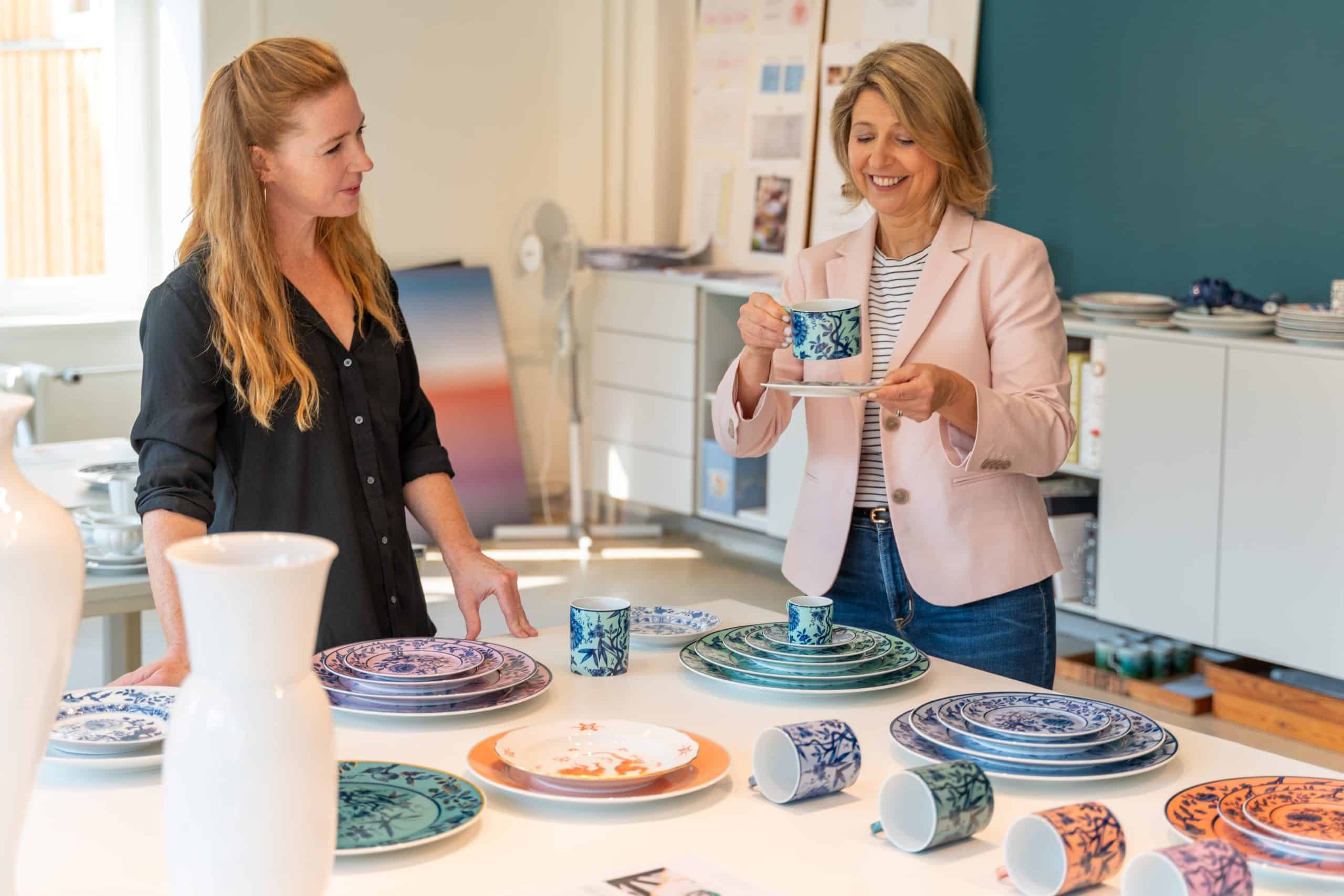
Only a little over an hour from Leipzig is the type of smaller town that packs a punch – a porcelain punch to be exact. Meissen (or Meißen) has been around since the 900s, but what really put it on the map was when it became the very first European porcelain manufacturer in 1710. Back then all of Europe was in love with Chinese porcelain and went to great lengths to pay for it! Only under Augustus the Strong, Elector of Saxony, did scientists finally figure out the formula. It didn’t take long after this discovery for production to start in Meissen. Tour guide Heidi Diessner took me through the present-day factory to see how artists still use the same handicraft practices now as they did 300 years ago.
WHEN YOU VISIT
Be sure to book their Behind the Scenes tour so you can check out their Mold Archive. It contains over 700,000 molds going back to the 1740s! I even got to check out “The Original” collection – a contemporary take at their iconic blue onion pattern from 1730.
CONTACT
Meissen Porcelain Manufactory
Talstraße 9
01662 Meißen, Germany
How to Peacefully Change History
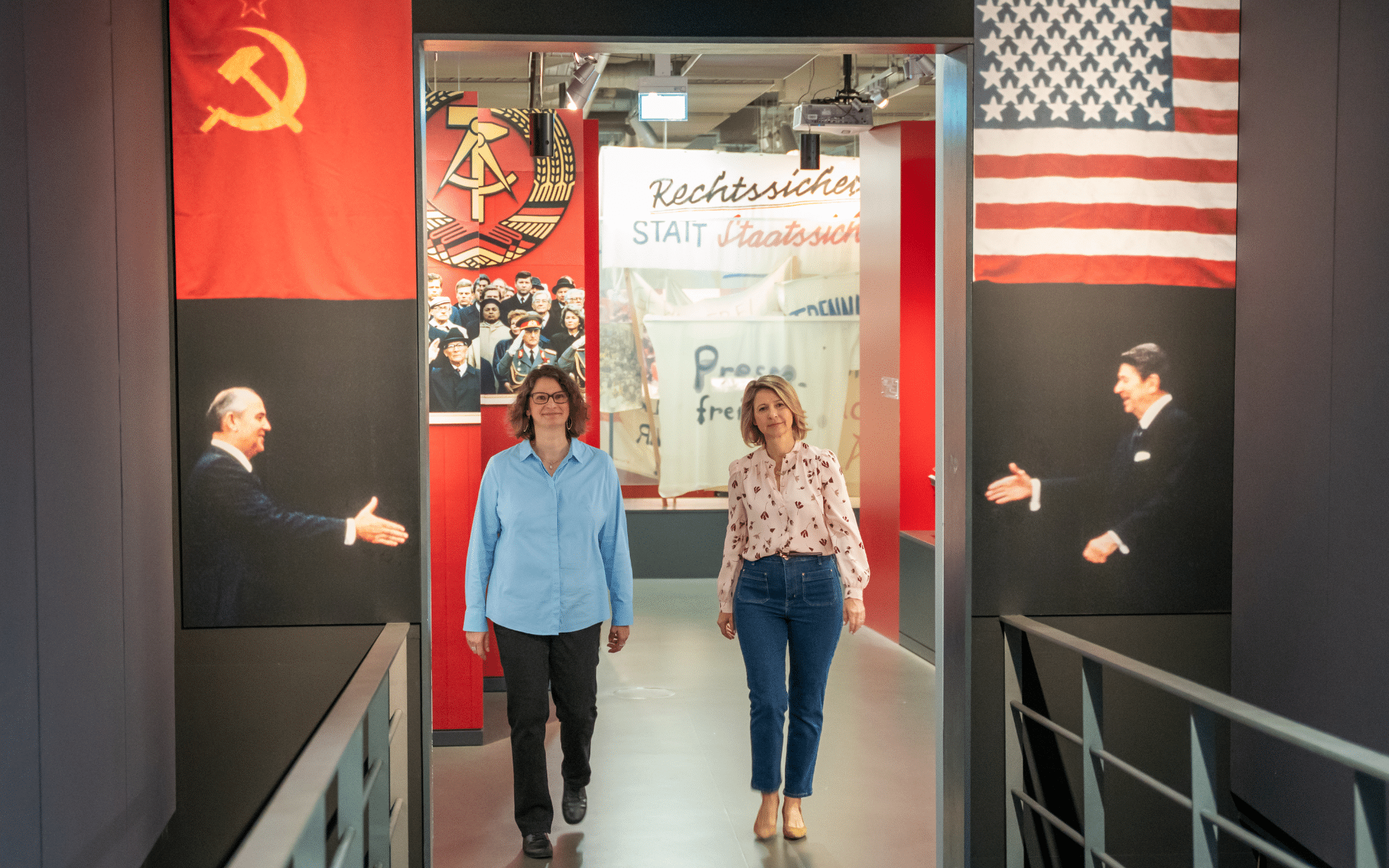
Remember how I said Leipzig impacted German history more than once? Well, the second time this city played a historical role was in bringing down Communism in Germany! Following World War II, it found itself a part of the German Democratic Republic and faced a dictatorship with little in the way of freedom. I joined guide Yvonne Walter at the Leipzig Forum of Contemporary History (Zeitgeschichtliches Forum Leipzig) to learn how peaceful prayers at St. Nicholas Church soon became a demonstration so large that the East German government immediately enacted a travel law that brought the Berlin Wall down overnight.
FUN FACT
Instead of “to go voting” in Leipzig, people referred to it as “to go folding.” This is because the candidates were decided in advance and there were no options to choose from.
CONTACT
Zeitgeschichtliches Forum Leipzig
Grimmaische Str. 6
04109 Leipzig, Germany

One of the Most Significant Cold War Symbols
28 years, that’s exactly how Berlin existed. Following World War II when Germany was divided into the communist east and democratic west, Berlin, which was located in the east, was also further divided in half. In 1961, East Germany built the 70-mile long concrete barrier to keep its citizens from escaping, and when it fell in 1989, it was seen as the symbolic end to the larger, decades-long Cold War. With Berlin on Bike guide Sascha Möllering, I biked around to different landmarks while he told me what it was like actually being there the day the wall came down.
WHEN YOU VISIT
Make time to visit the Berlin Wall Memorial. It pays homage to those who lost their lives trying to escape over the wall.
CONTACT
Berlin on Bike
Knaackstraße 97
10437 Berlin, Germany
A Hero Worth Remembering
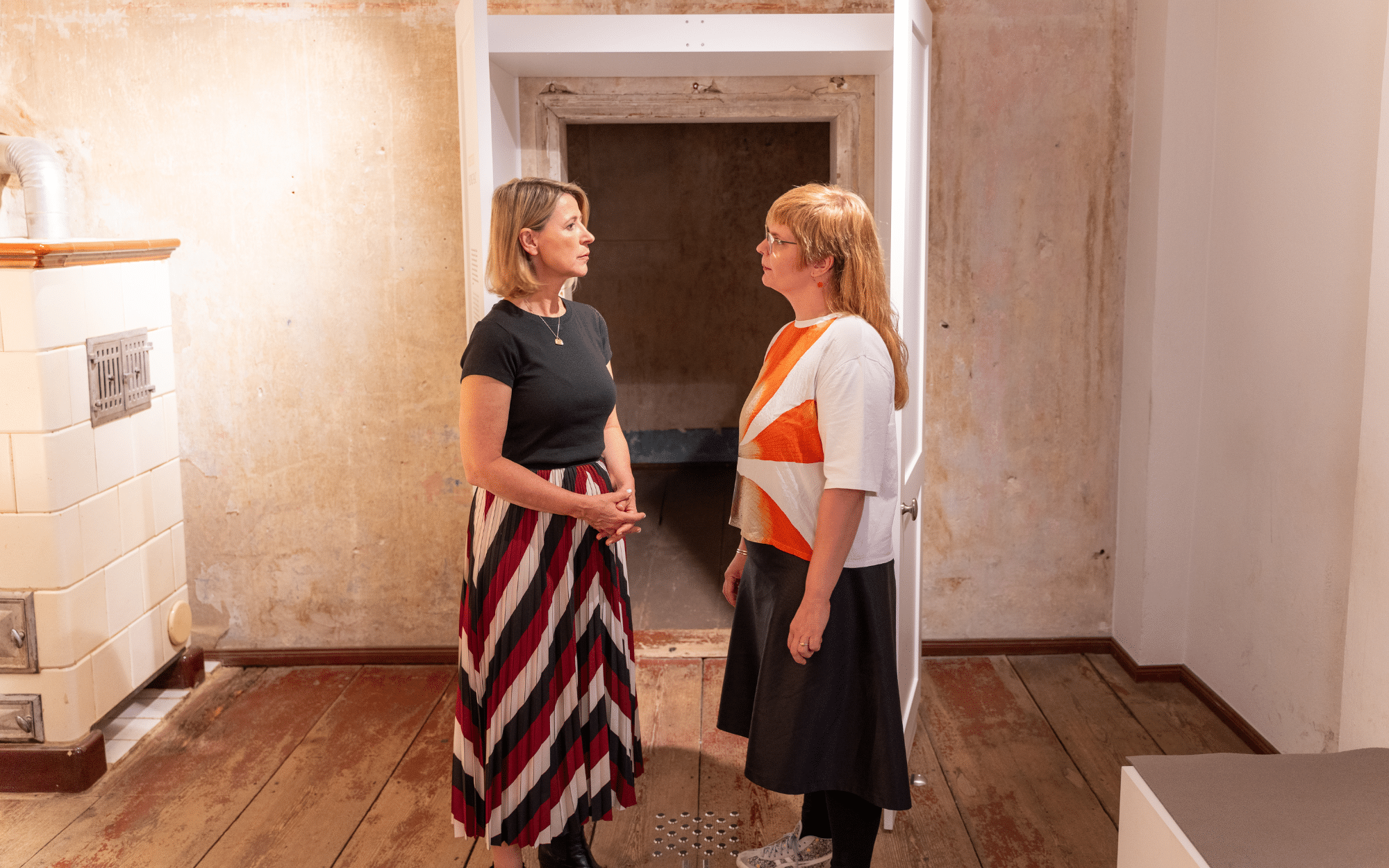
It would be remiss of us to visit Germany and not focus on another, darker time in its history – the Holocaust. However, even as we remember this genocide, the ramifications of which are still felt to this day, we must also never forget the everyday heroes who risked their lives saving as many innocent people as they could. One of those heroes is Otto Weidt and tucked away near Hackescher Markt, you can visit a museum dedicated to his work. I joined researcher Elisabeth Anschütz as she shared stories of how Weidt, an important producer of brooms and brushes, was able to protect a number of Jews, specifically blind and deaf Jews, at his workshop.
COOL FUN FACT
Even after the war, Weidt’s work continued when he established an orphanage for survivors of the concentration camps.
CONTACT
Museum Blindenwerkstatt Otto Weidt
Rosenthaler Str. 39
10178 Berlin, Germany
Where to Find the Best Souvenir in Berlin
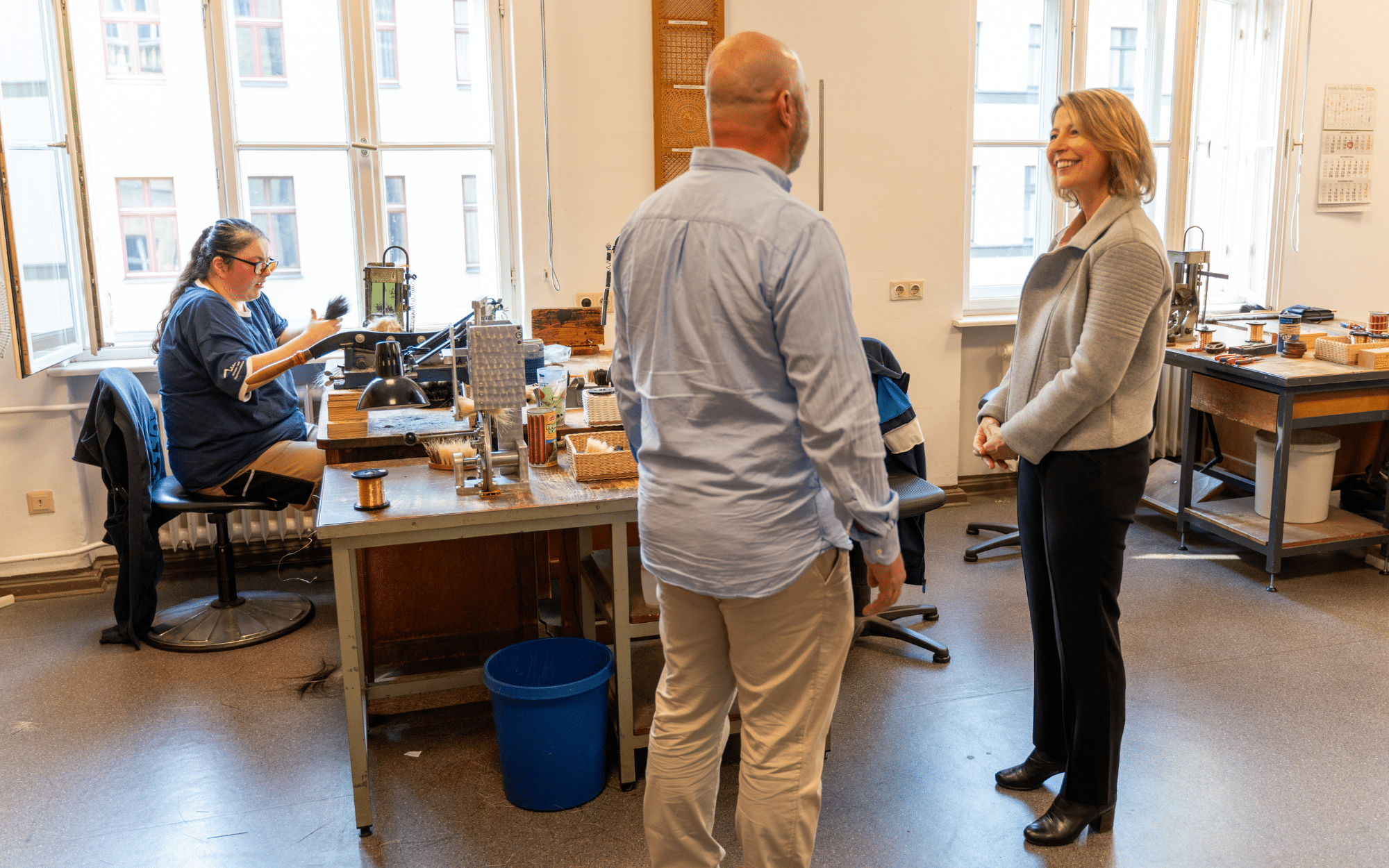
When looking for souvenirs, visit The Inclusive Manufactory (Die Inklusiv Manufaktur). What started as a public school for the blind in 1864 has morphed into a company where people with and without disabilities work together to create beautiful, handcrafted goods. Onsite, the DIM team designs and manufactures everything from ceramics to wooden toys to furniture, but their specialty is with brushes.
FUN FACT
At DIM, around 60 employees are responsible for making 100 different types of brushes!
CONTACT
Die Inklusiv Manufaktur
Oranienstraße 26
10999 Berlin, Germany
The One Food You Have to Try in Berlin
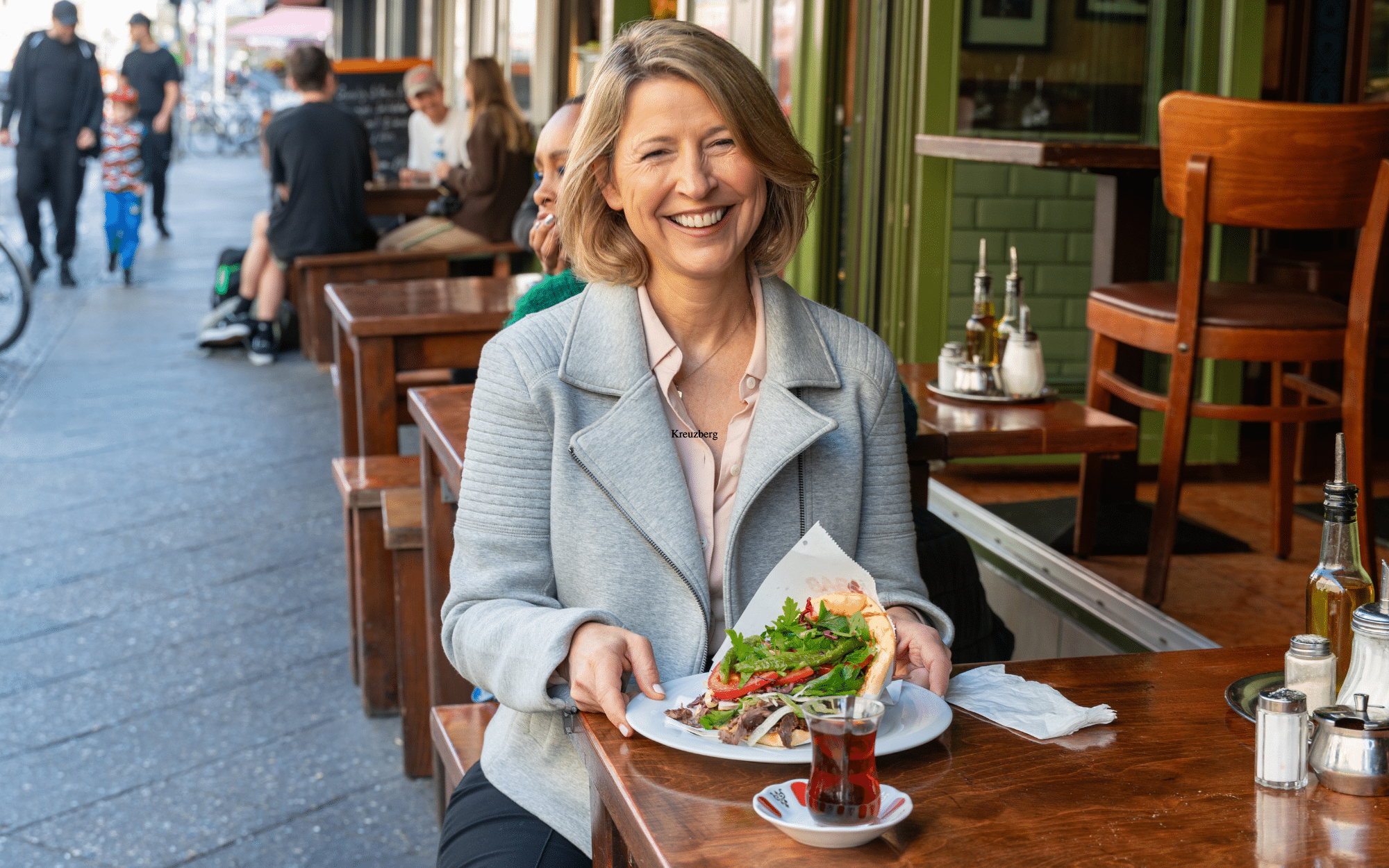
Some may say currywurst is that food but I have it on good authority that, really, you don’t want to miss the doner kebabs. And nowhere does them better than the Kreuzberg district of Berlin. Known as one of the city’s hippest neighborhoods, this is where the cool kids congregate! Because of its large Turkish population, it’s also home to a number of fast-food restaurants that serve up mouthwatering doner kebabs and more. I got my fix at Hasir Turkish Restaurant, which has been around since 1970.
Like this post? Pin for later!
FUN FACT
Back in the 1970s, Kreuzberg was home to the punk rock movement in Germany.
CONTACT
Hasir Turkish Restaurant
Adalbertstr. 10
10999 Berlin